METAPHORS OF SPACE AND TEMPORAL REPRESENTATIONS OF THE DIGITAL ERA
DIGITAL TEMPORALITIES, NARCOTIC CONSUMPTION AND TECHNOLOGICAL HYPNOSIS
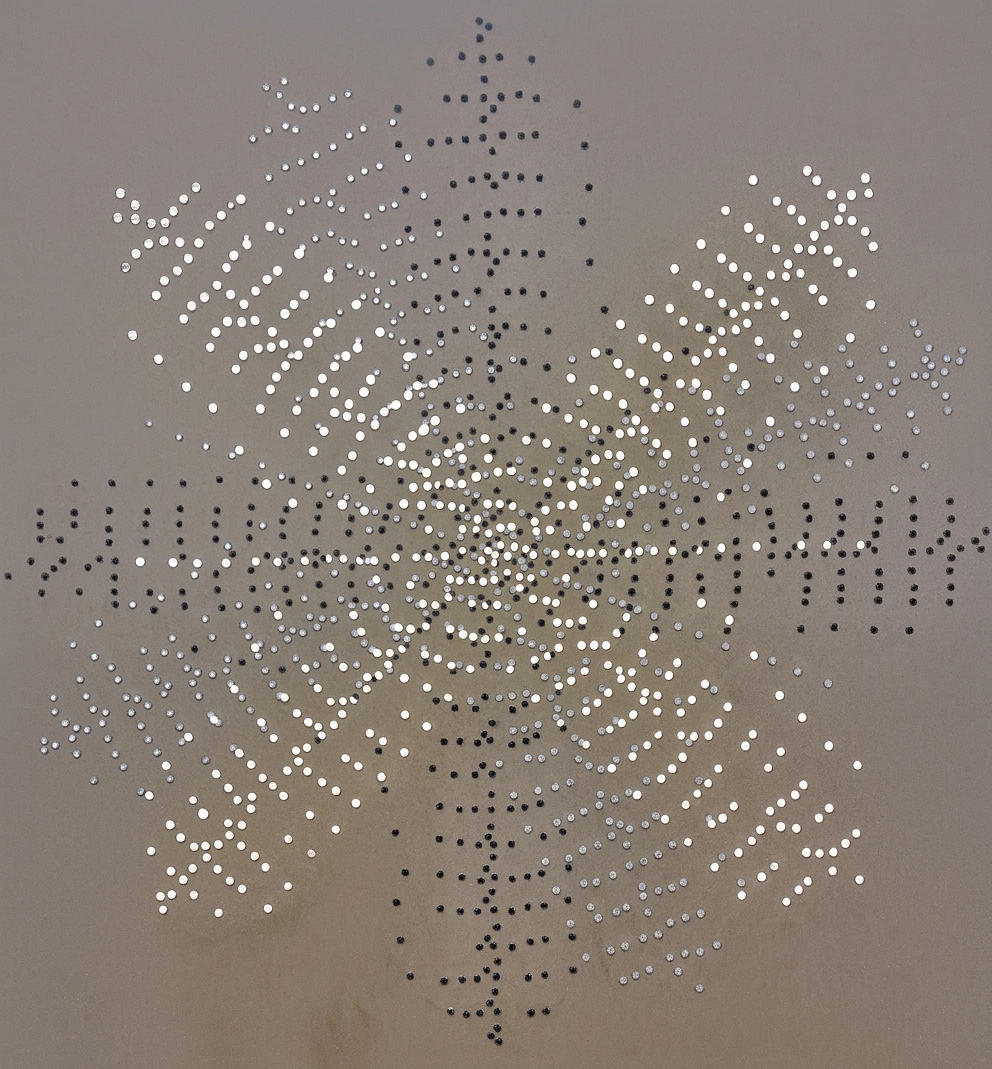
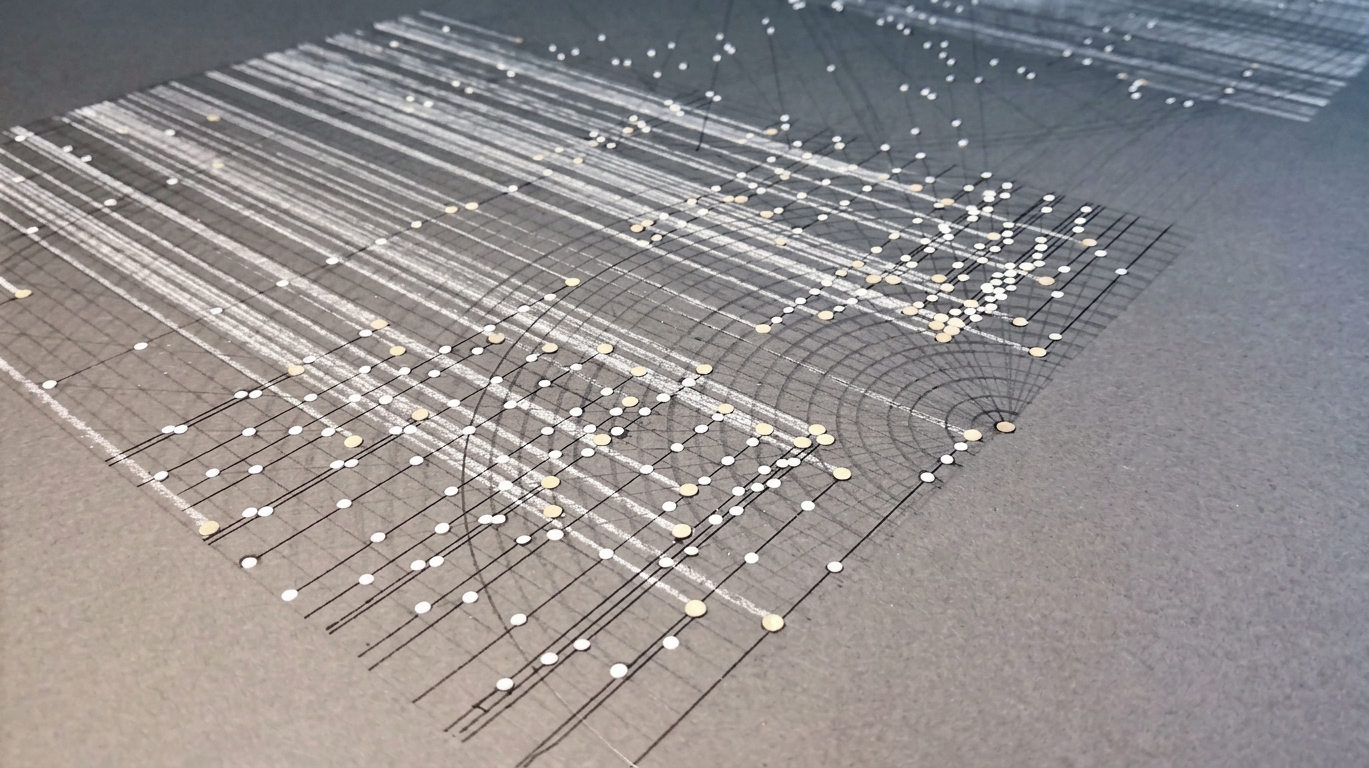
From this point onward, a field of research opens around the image and its consumption in the digital era. The pixel is approached as a minimal unit—a point, a zero—not as an element of representation, but as a site of excavation: a threshold from which an endless, hypnotic network of questions unfolds, without absolutist answers.
EMPLACEMENT–DISPLACEMENT, SPIRAL MOVEMENT: Perforation technique and collage on paper, 50 × 70 cm, 2017
This terrain reveals a mode of consumption that operates in a narcotic way: a perceptual drift that not only seduces, but disorients and absorbs. The research is articulated through a reflection on the consumption of blue light from digital screens, examining how it affects perception and alters the experience of time and space. A significant shift becomes evident: direct observation of reality gives way to the construction of mediated realities through the image.
Within this context, an inquiry into light emerges—as both material and active agent—opening a dialogue with the scientific field, including exchanges with the Institute of Photonic Sciences. Anticipating what is now referred to as addiction, this condition was at the time conceptualized as an “abducted time”: a suspension of experience that reorganizes attention and memory.
Today, this phenomenon can be understood as one of the most incisive conditions of contemporaneity—not only for what images contain or conceal, but for how they profoundly affect perception, memory, vision, and the construction of space and time.
Thus begins a new phase of work: a line of research that unfolds multiple conceptual directions while structuring new propositions, establishing a core from which the practice continues to develop with increasing critical awareness and depth.
METÁFORAS DEL ESPACIO Y REPRESENTACIONES TEMPORALES DE LA ERA DIGITAL
TEMPORALIDADES DIGITALES, CONSUMO NARCÓTICO Y HIPNOSIS TECNOLÓGICA
A partir de este punto se abre un campo de investigación centrado en la imagen y en su consumo en la era digital. El píxel se plantea como unidad mínima —un punto, un cero—, no tanto como elemento de representación, sino como lugar donde excavar: un umbral desde el cual se despliega un entramado hipnótico de preguntas sin respuestas absolutas.
Este territorio evidencia un tipo de consumo que opera de forma narcótica: una deriva perceptiva que no solo seduce, sino que desorienta y absorbe. La investigación se articula a partir de una reflexión desarrollada en torno al consumo de luz azul en las pantallas digitales, atendiendo a cómo esta incide en la percepción y altera las nociones de tiempo y espacio. Se observa entonces un desplazamiento significativo: la experiencia directa de la realidad cede lugar a la construcción de otras realidades mediadas por la imagen.
Es en este contexto donde se inicia una indagación específica en torno a la luz como materia y como agente activo, abriendo un diálogo con el ámbito científico —entre otros, a través de encuentros con el Instituto de Ciencias Fotónicas—. De forma anticipada a lo que posteriormente se ha denominado adicción, este fenómeno se conceptualiza en aquel momento como un “tiempo abducido”: una suspensión de la experiencia que reorganiza los ritmos de atención y memoria.
Hoy, este proceso puede entenderse como una de las formas más incisivas de la contemporaneidad: no solo por lo que las imágenes contienen o velan, sino por cómo afectan profundamente a la percepción, a la memoria, a la visión y a la construcción del espacio-tiempo.
Se configura así el inicio de una nueva etapa de trabajo: un campo de investigación que no solo despliega múltiples líneas conceptuales, sino que vertebra nuevas propuestas, consolidando un núcleo desde el cual la práctica continúa desarrollándose con mayor conciencia crítica y profundidad.
FREQUENCIES AND SPACES: mixed media on wood 100 × 100 cm, 2016
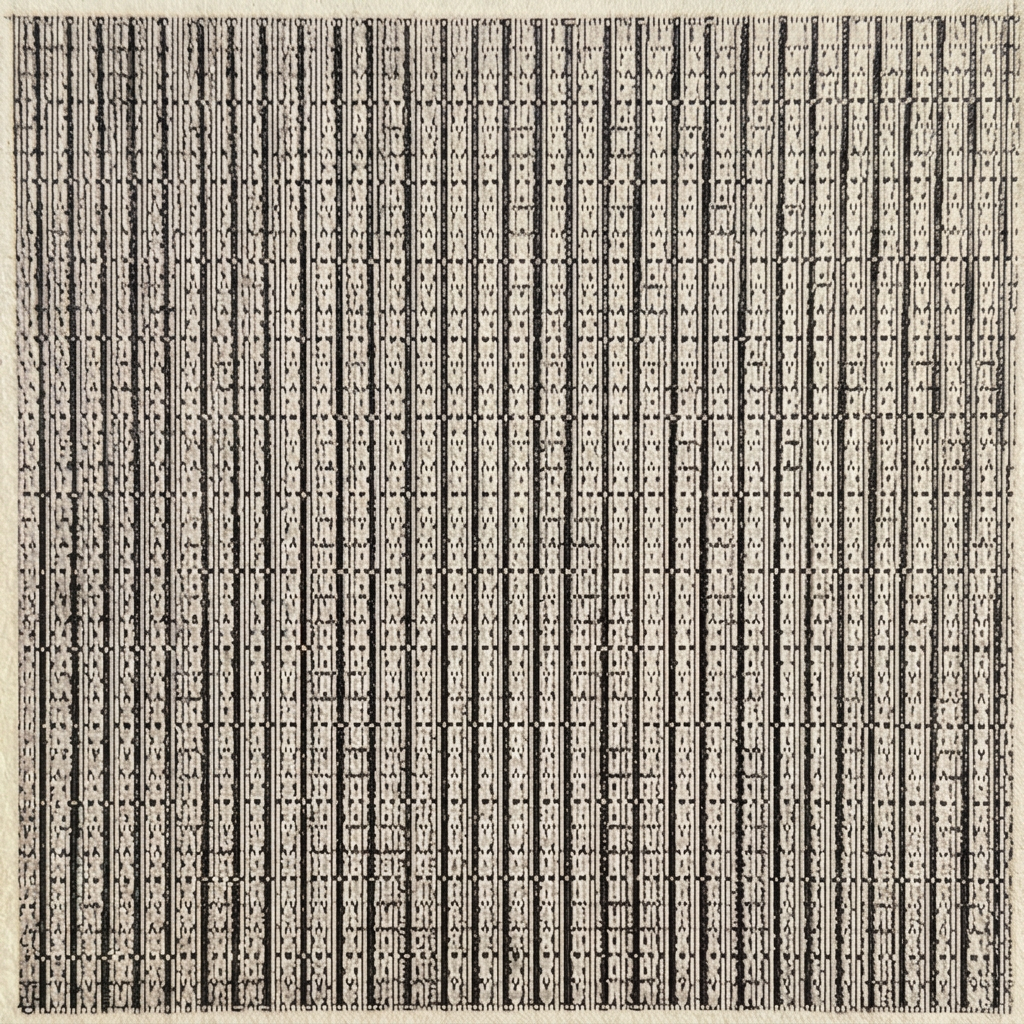
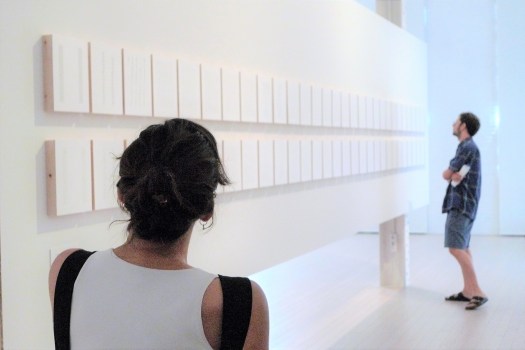
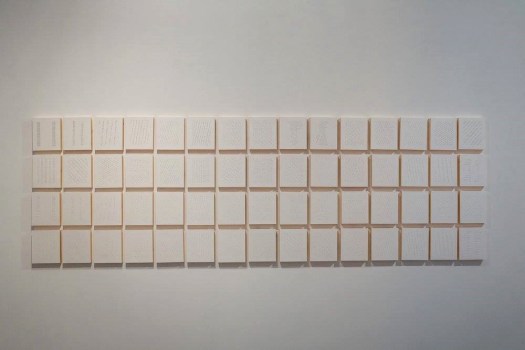
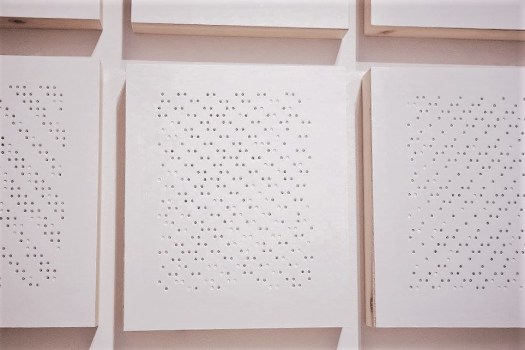
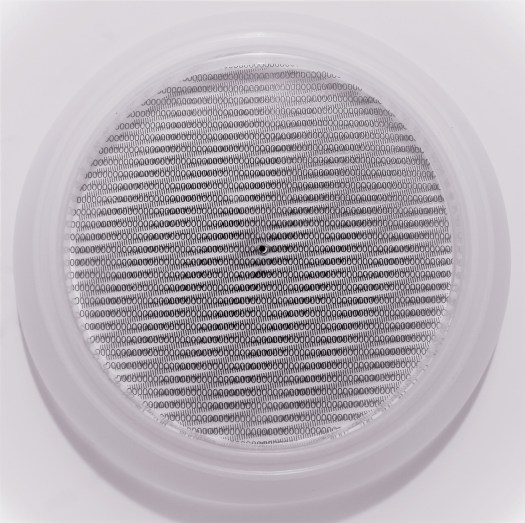
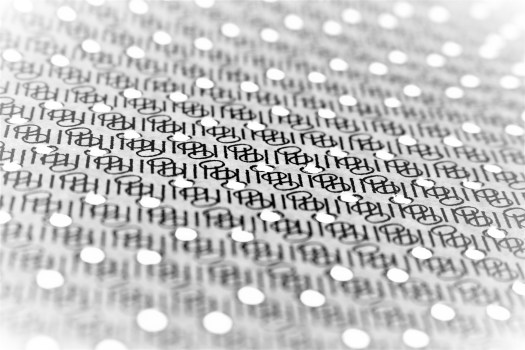
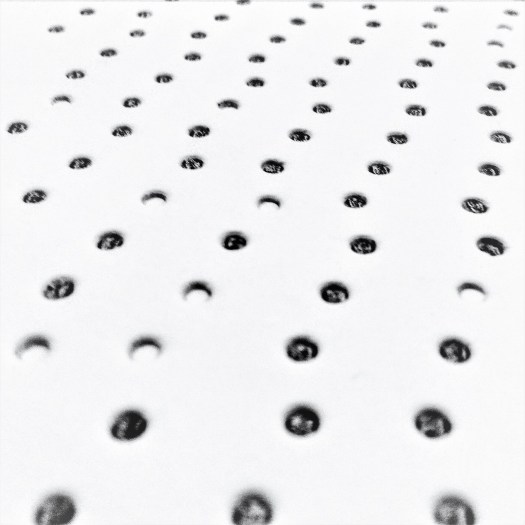
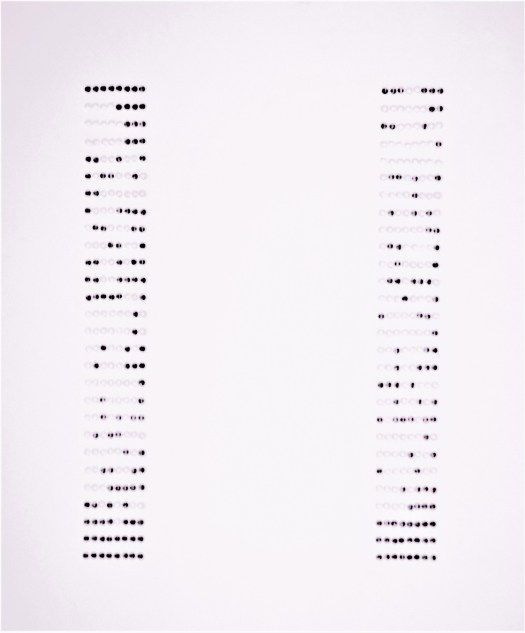
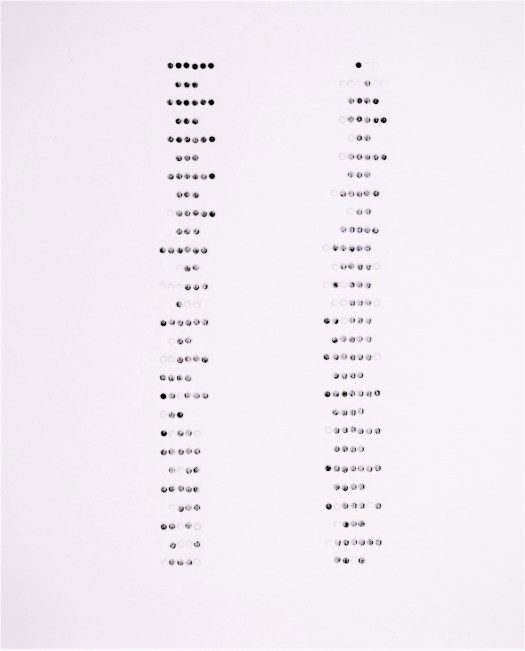
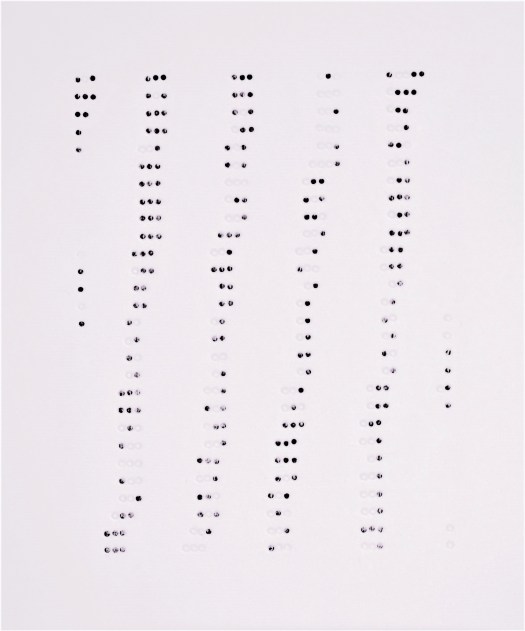
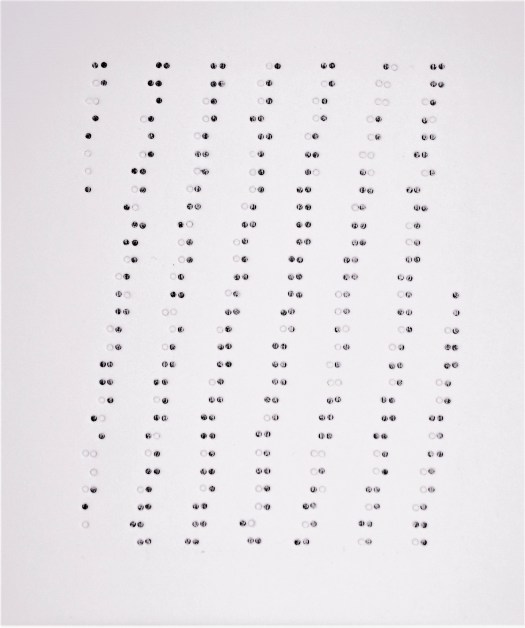
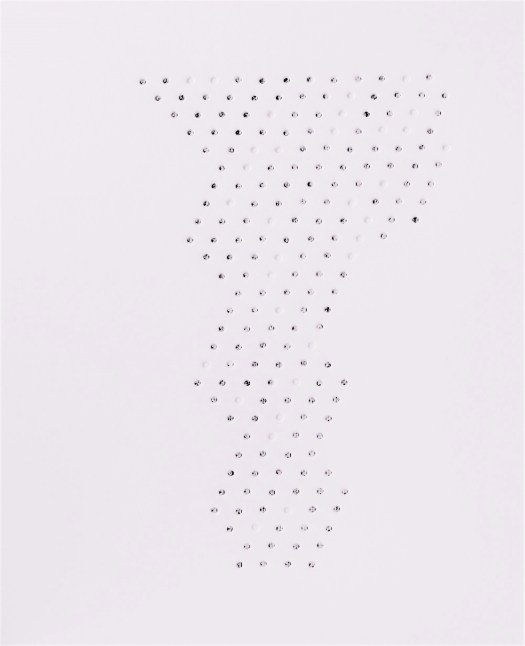
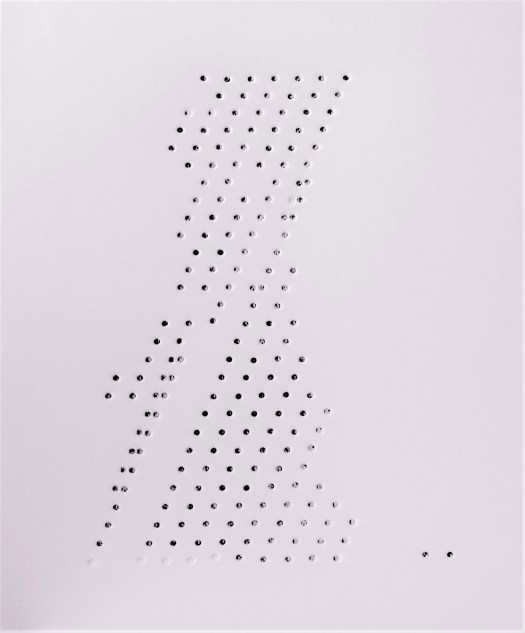
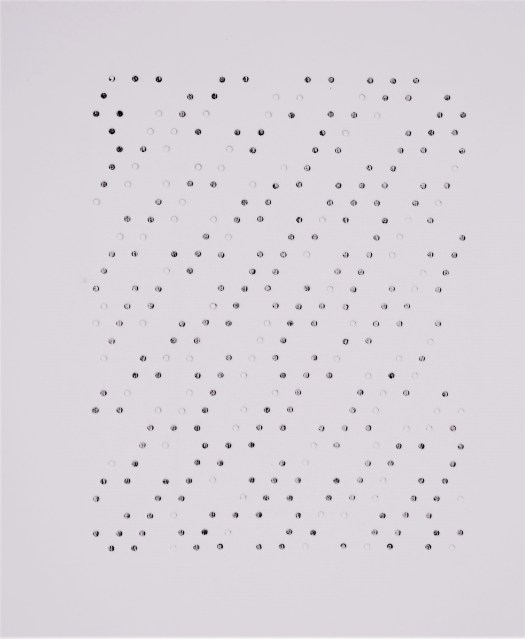
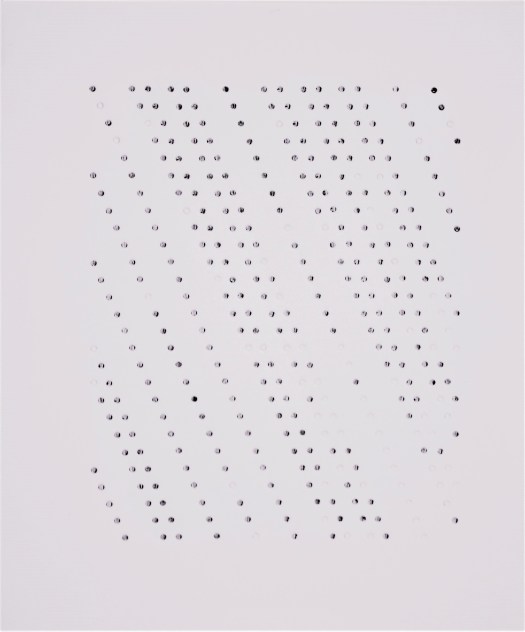
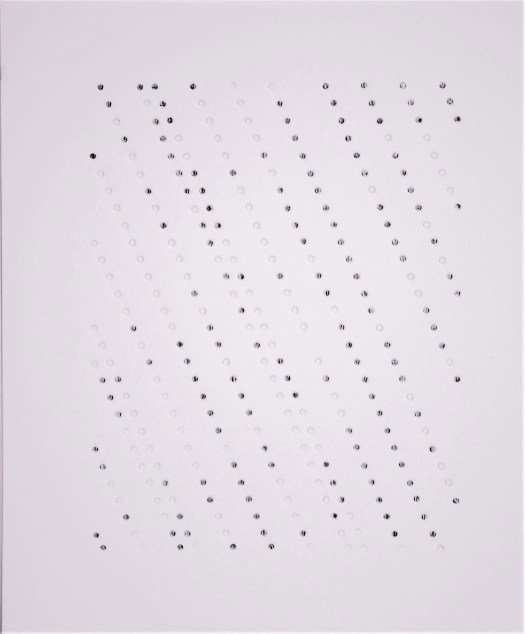
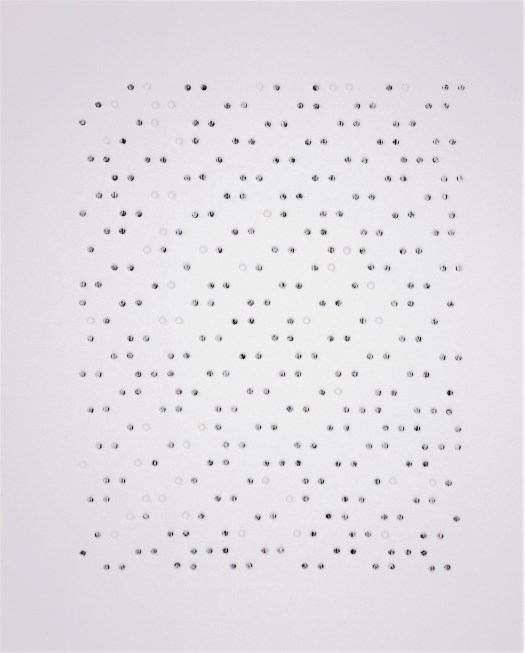
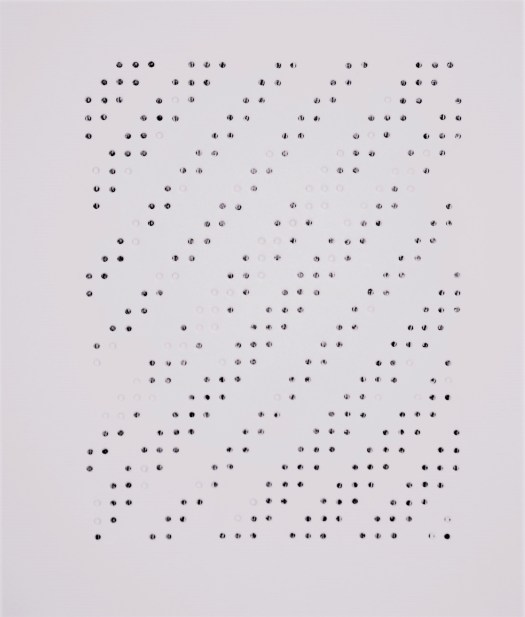
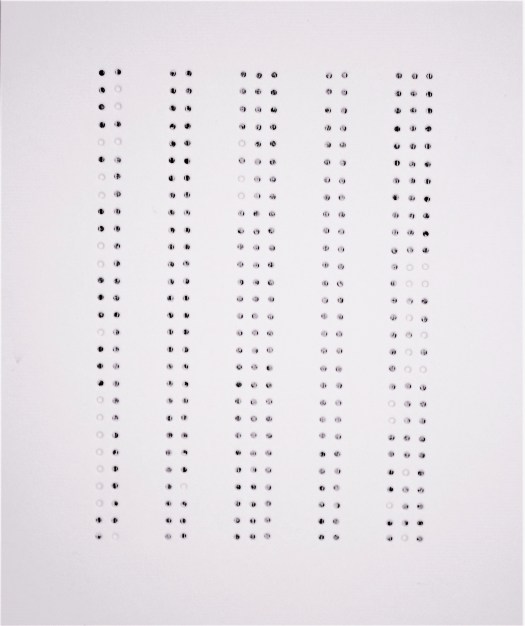
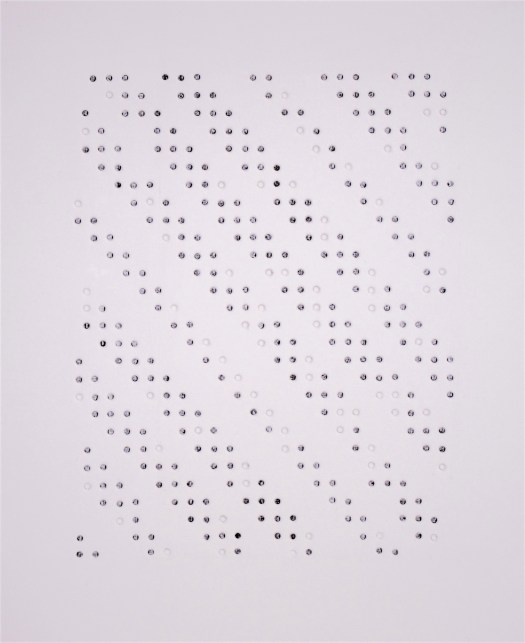
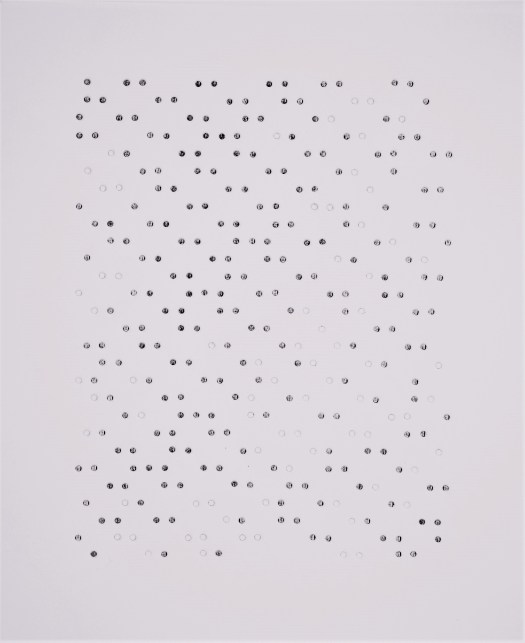
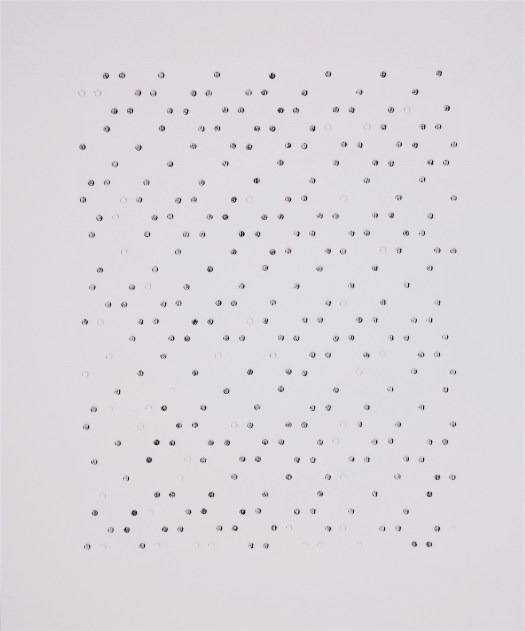
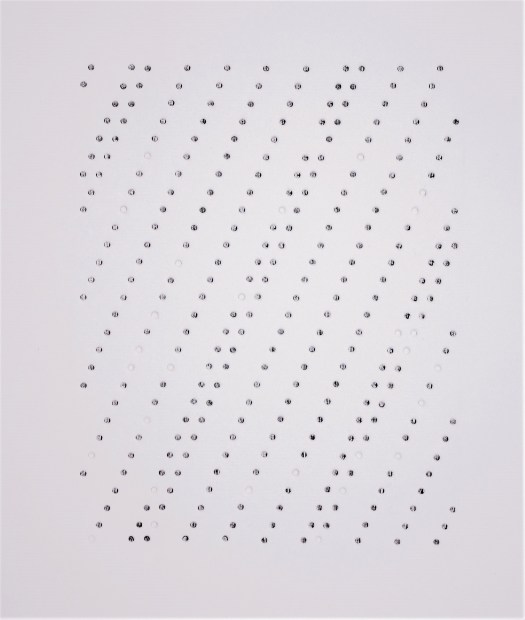
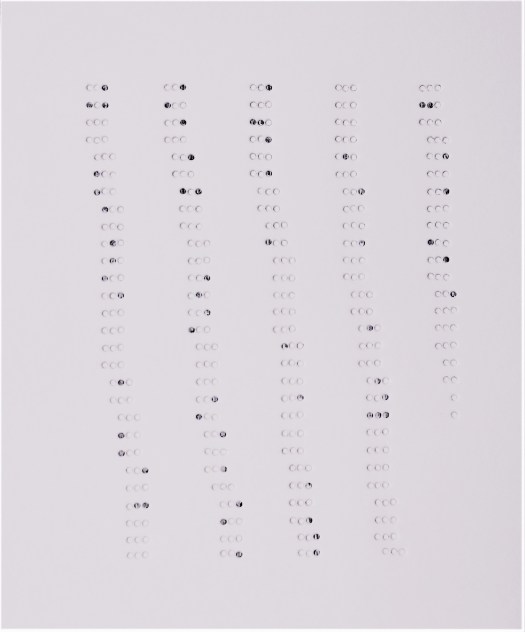
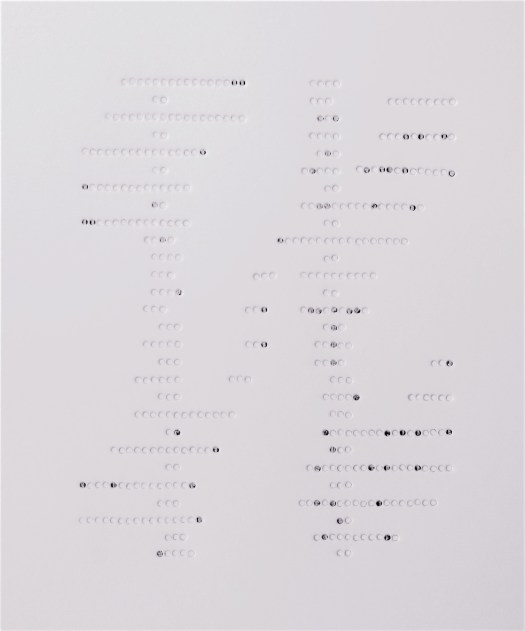
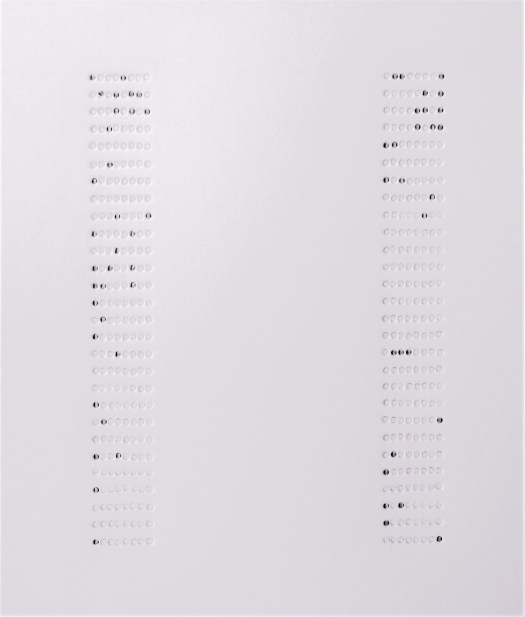
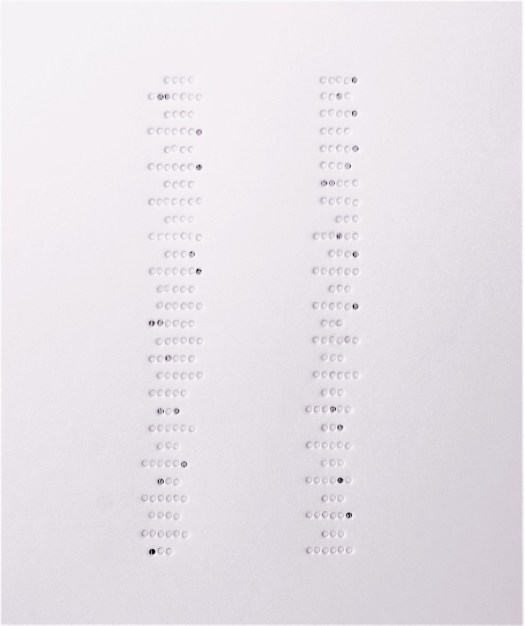
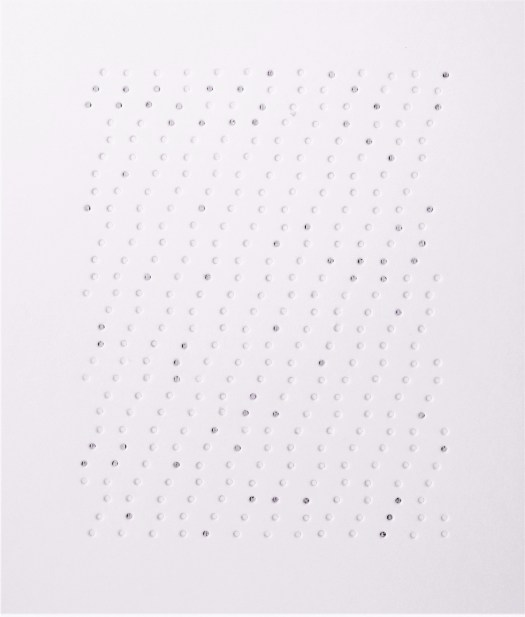
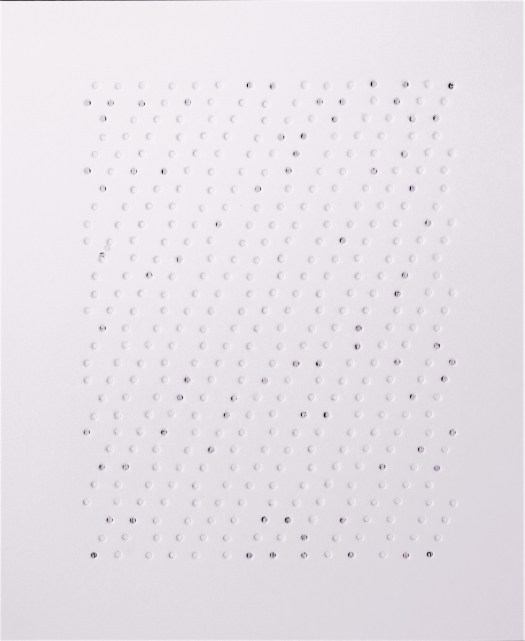
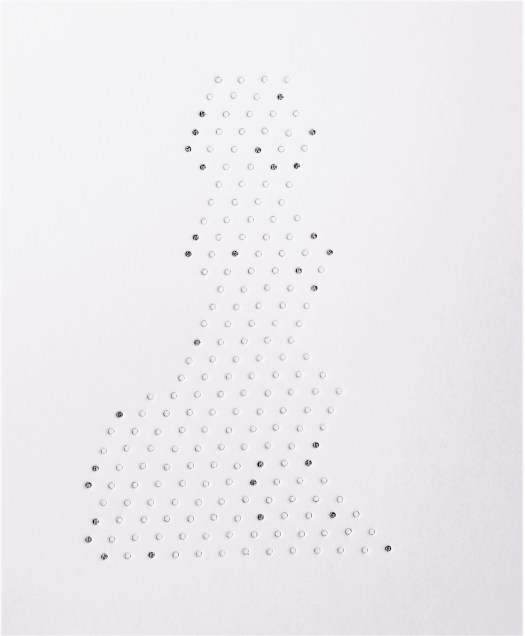
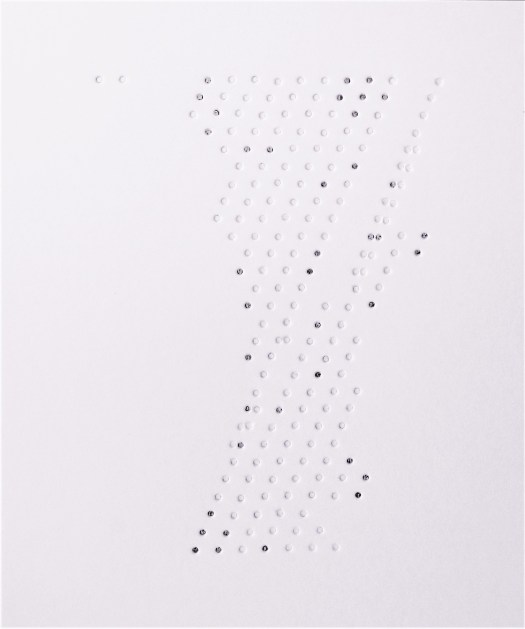
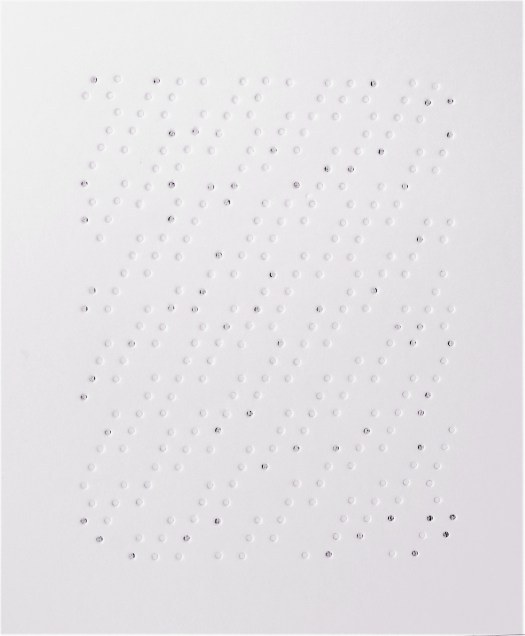
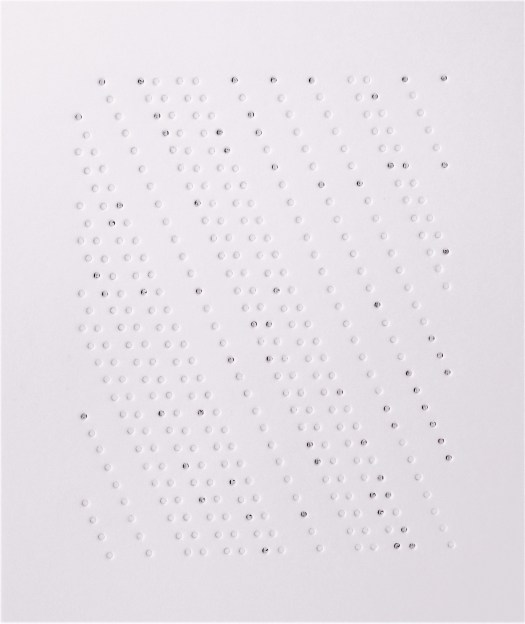
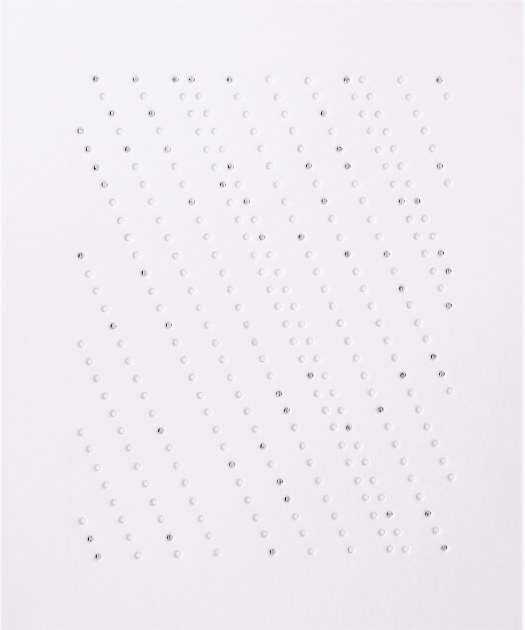
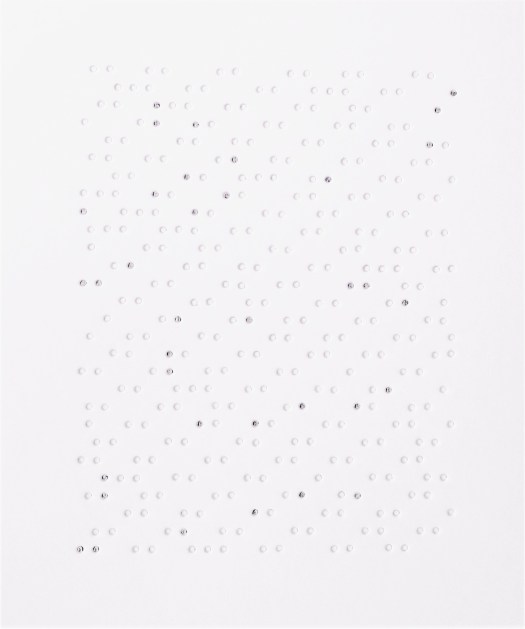
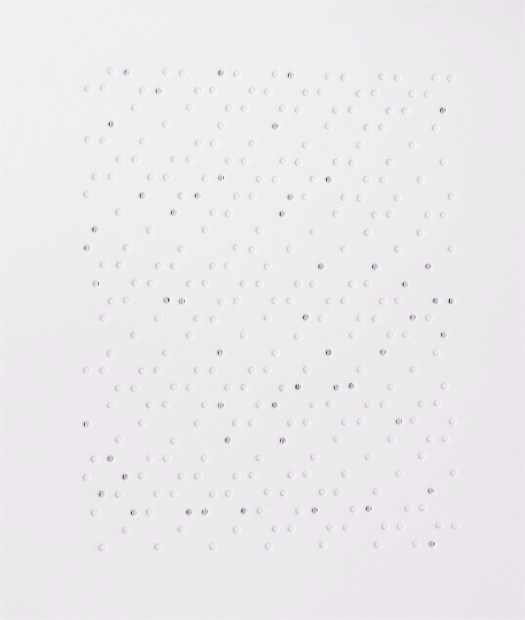
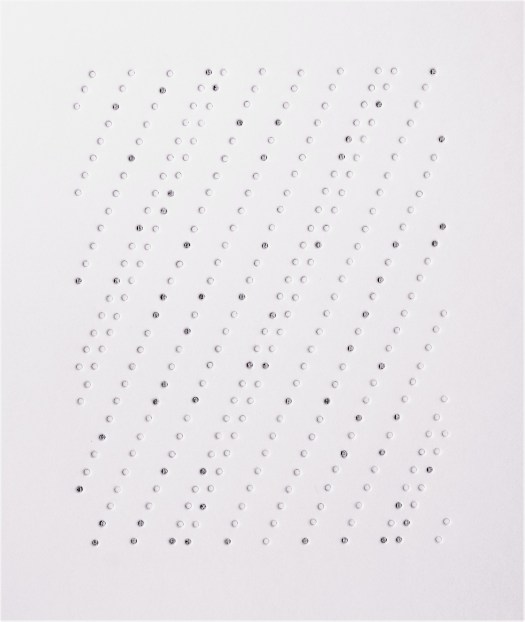
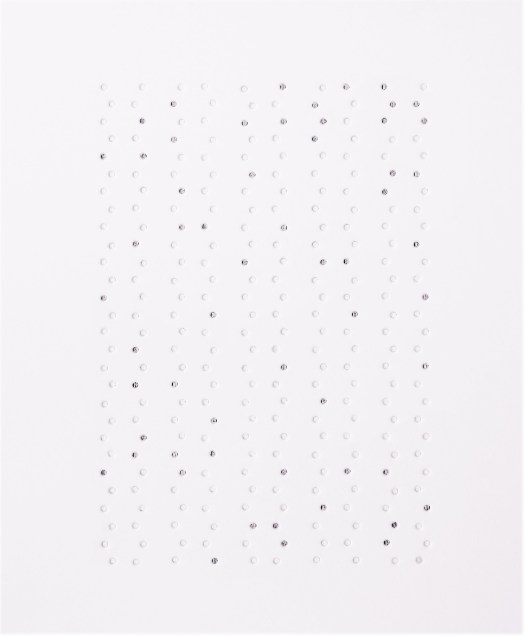
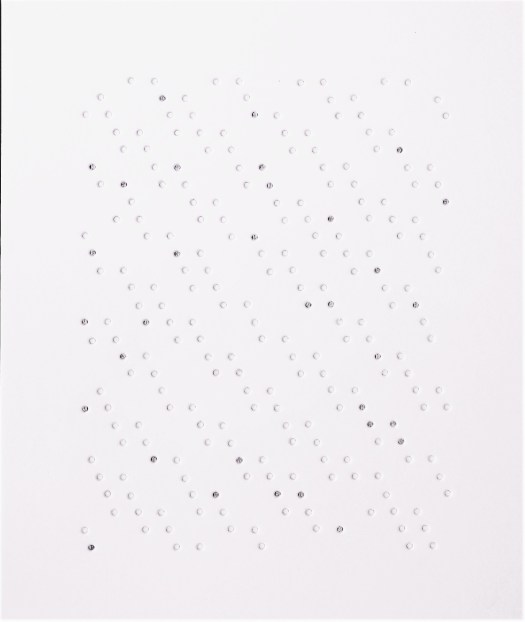
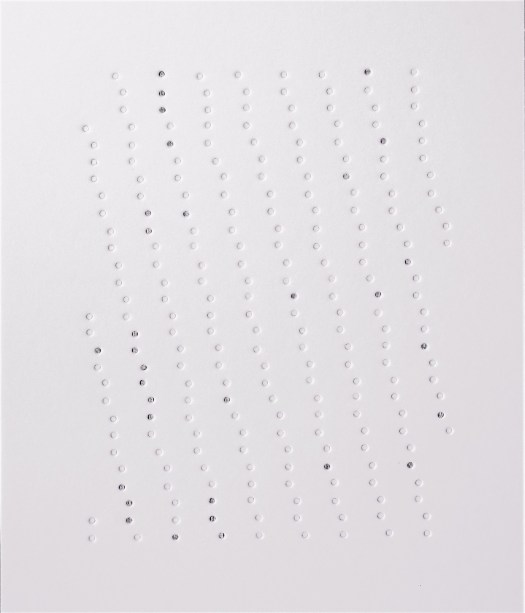
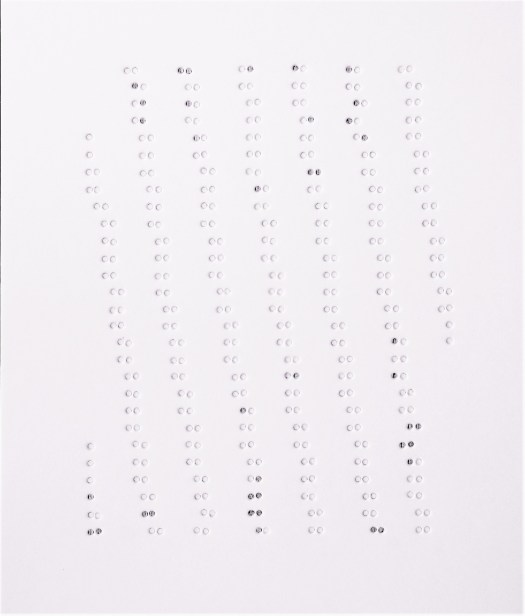
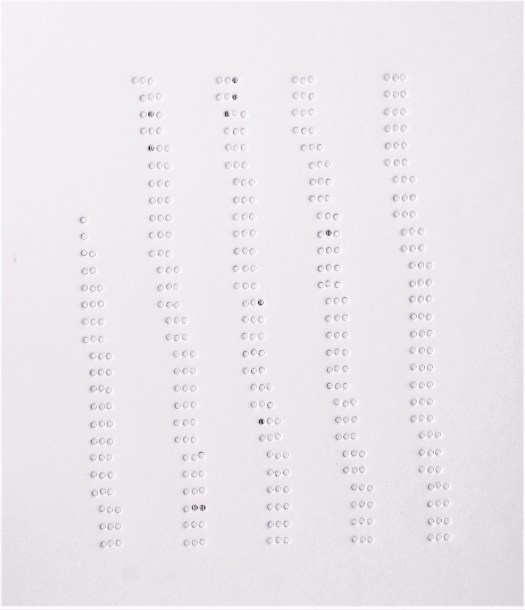
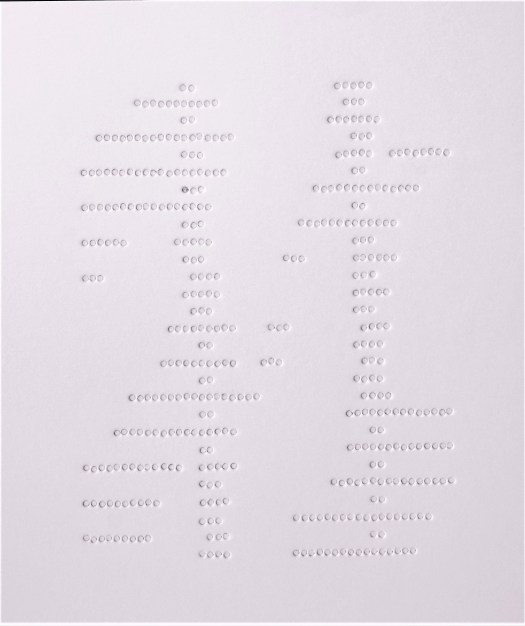
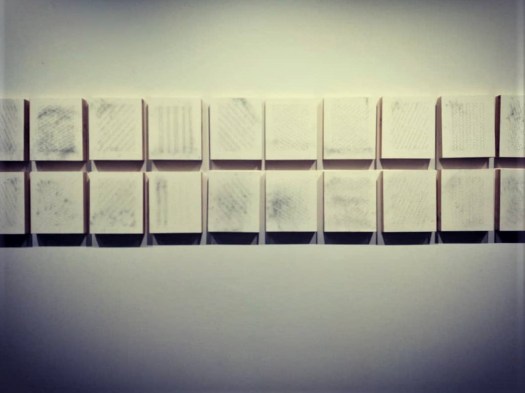
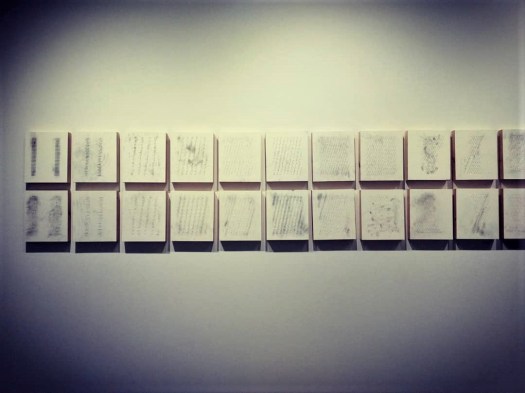
SIMULTANEOUS ETERNALS: 0=I installation of 60 units, 25.5 × 21.5 cm each, minting on paper and wood, 2017
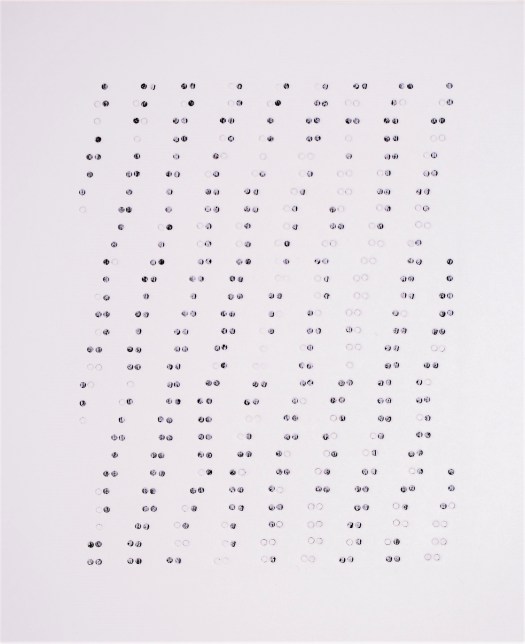
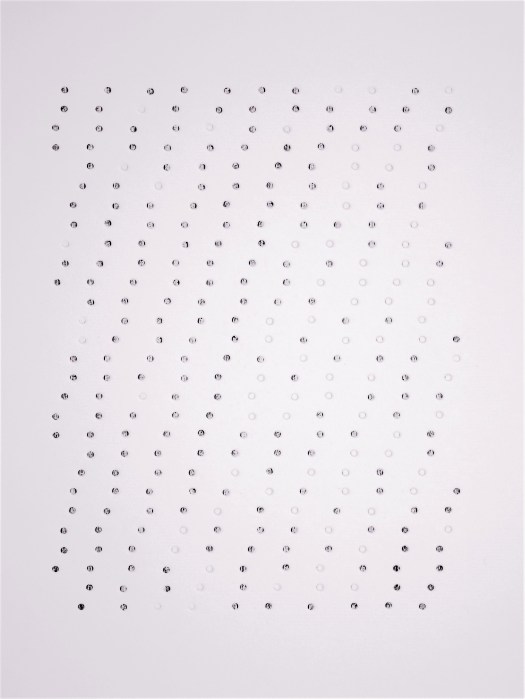
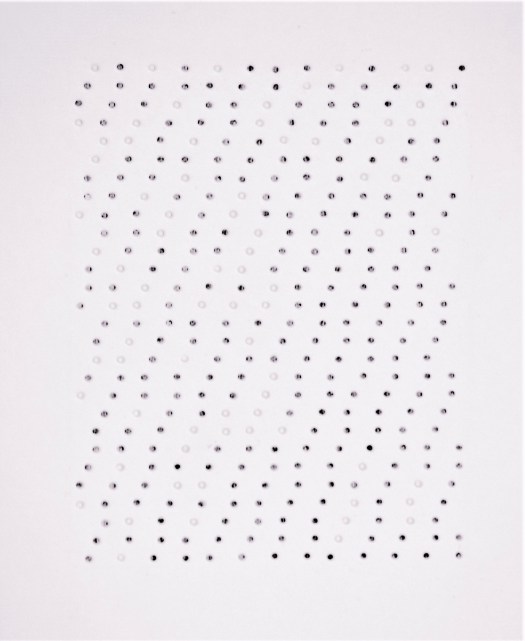
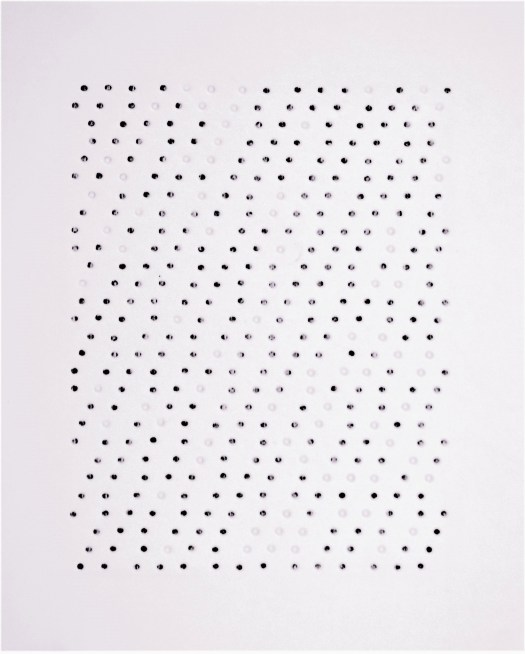
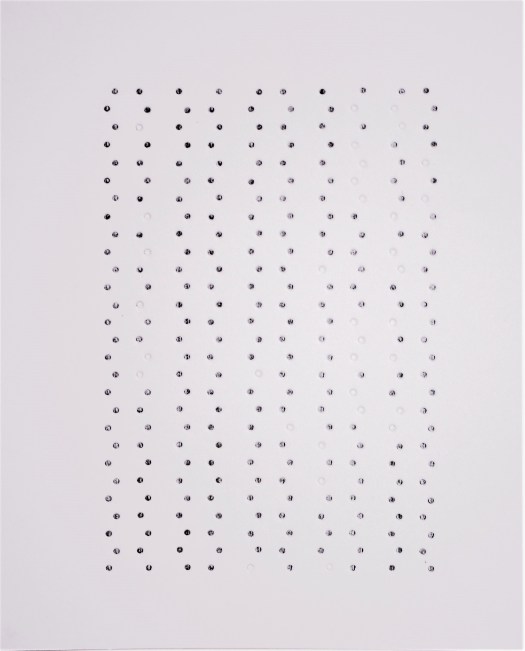
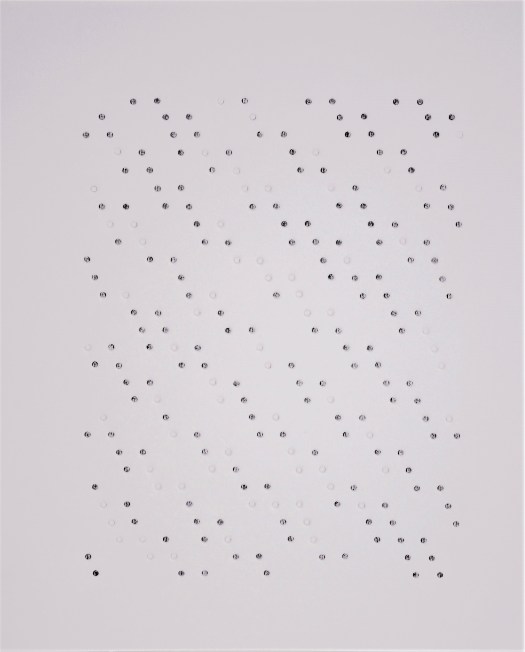
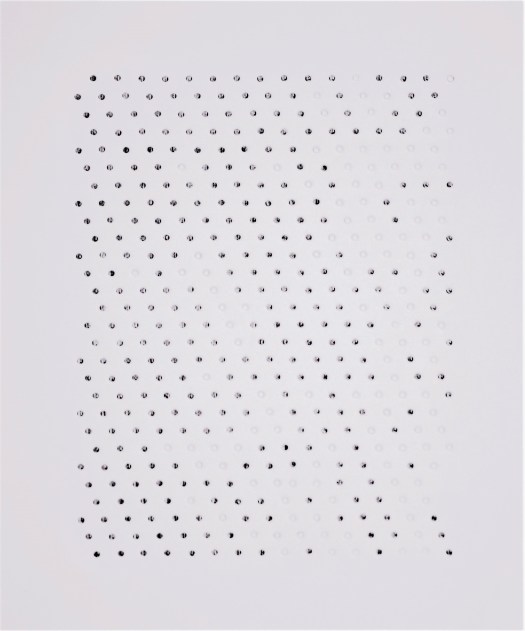
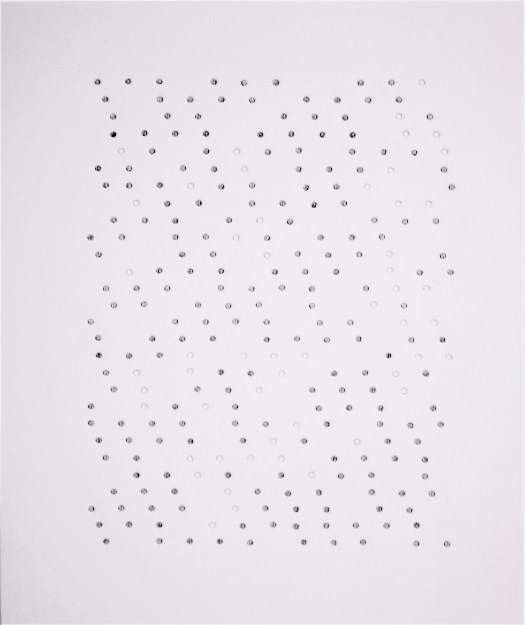
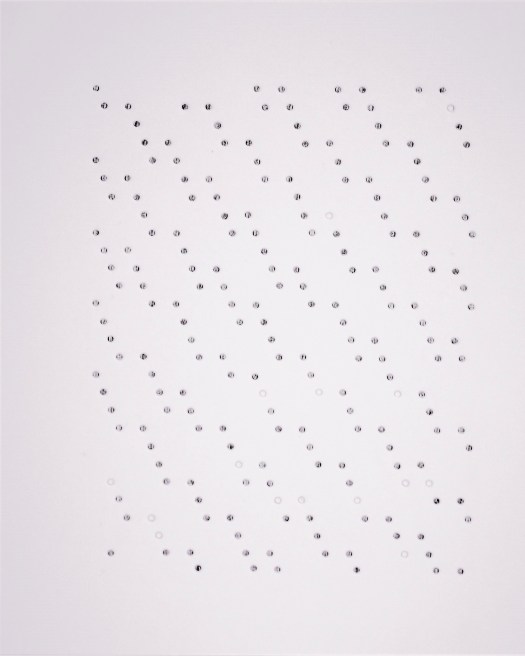
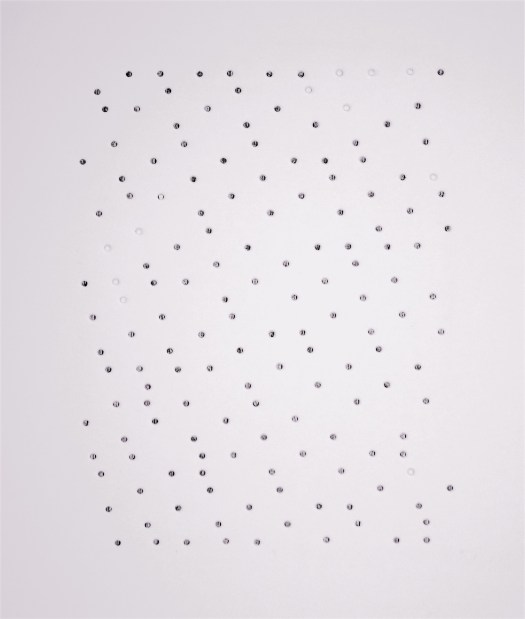
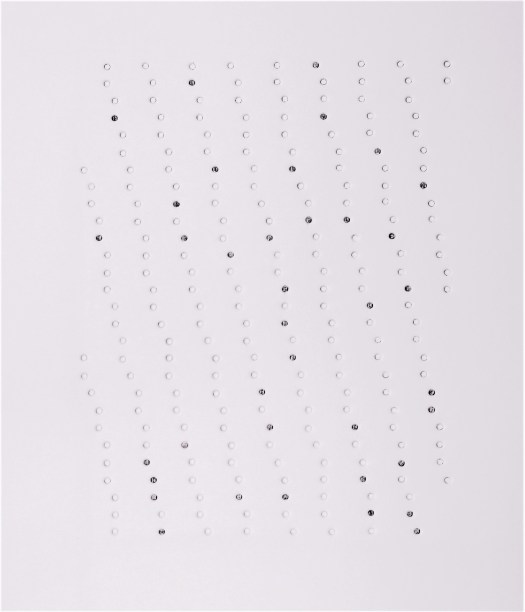
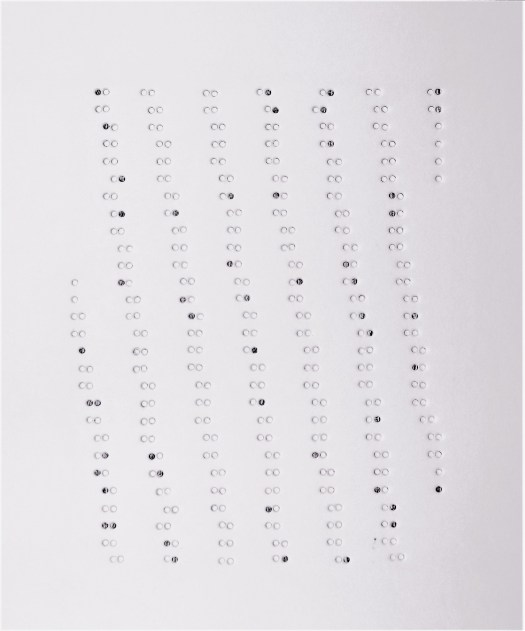
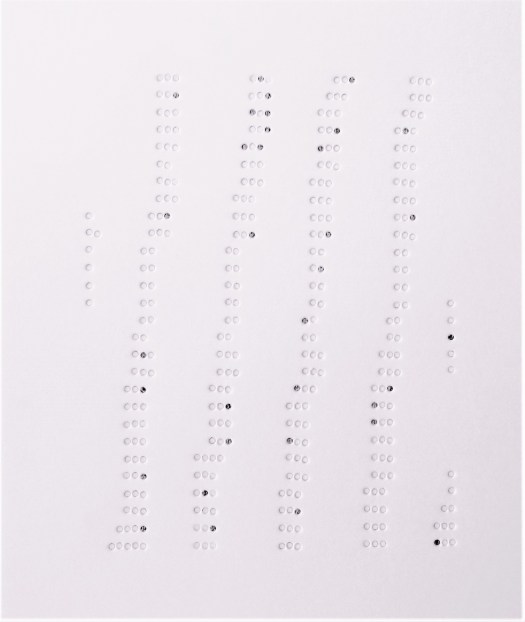
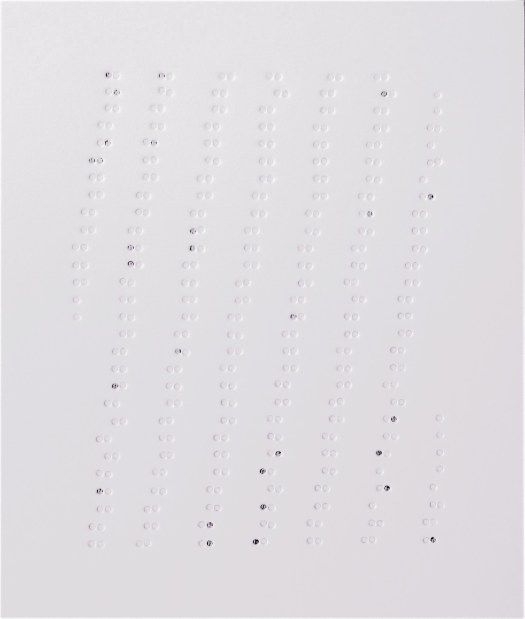
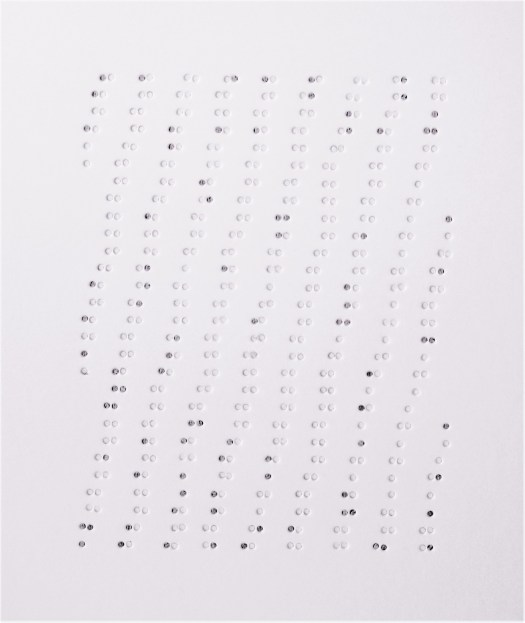
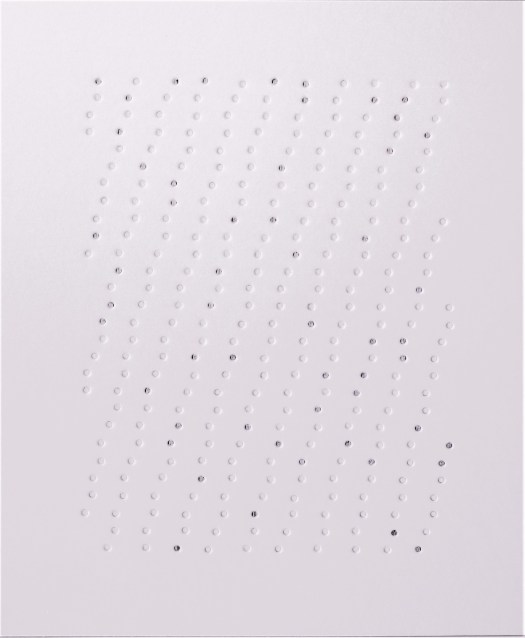
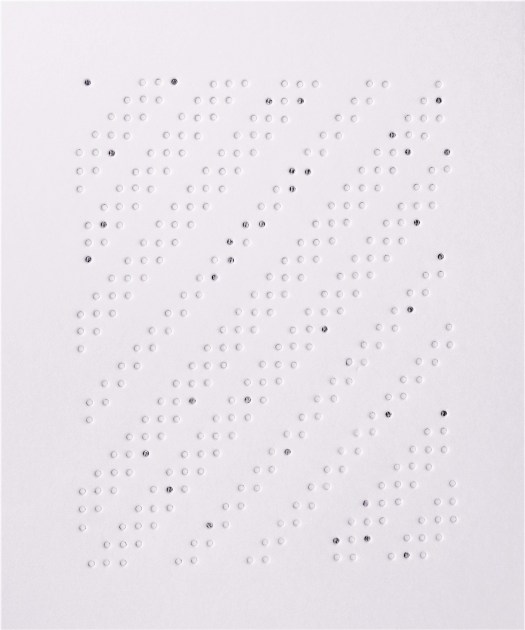
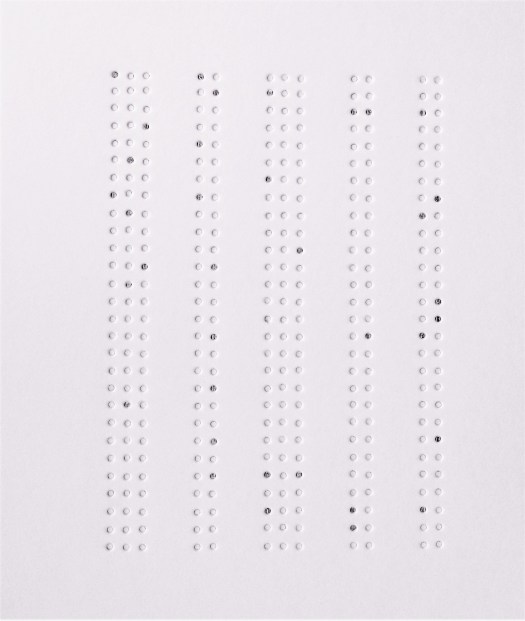
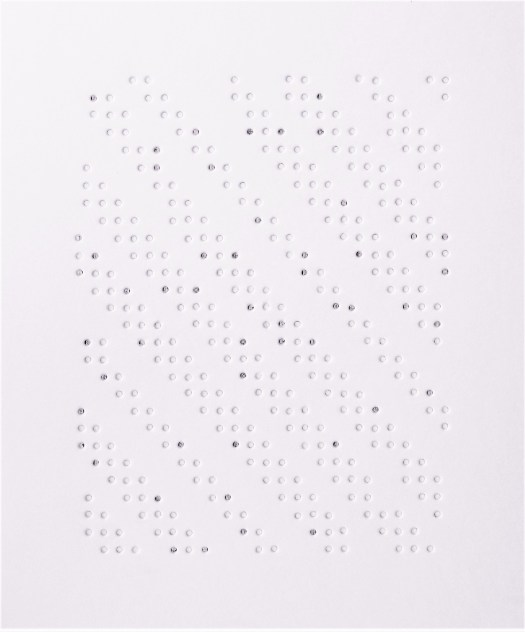
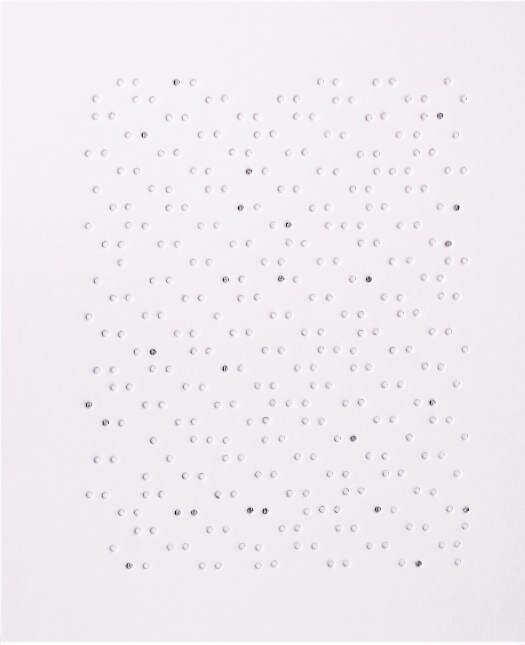
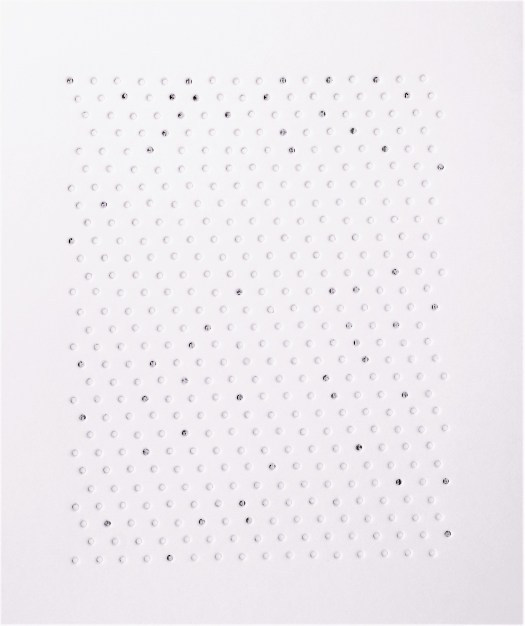
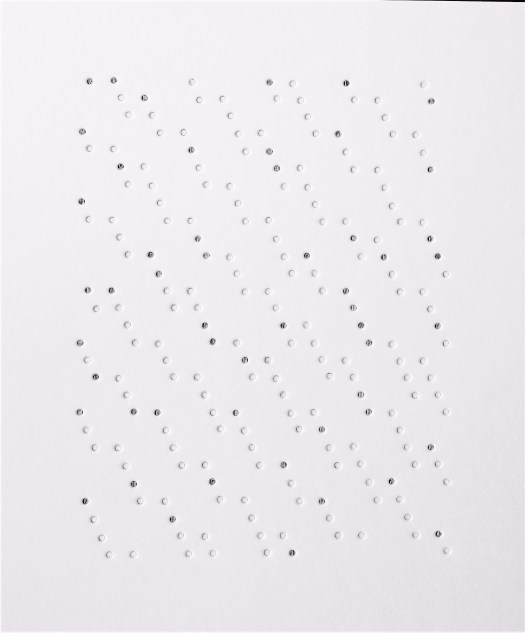
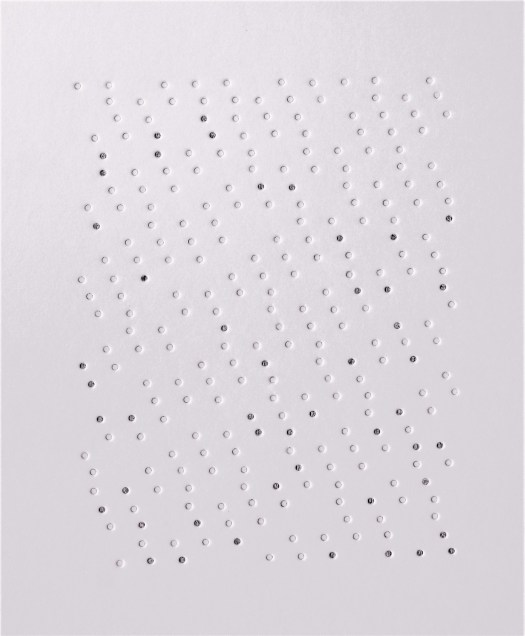
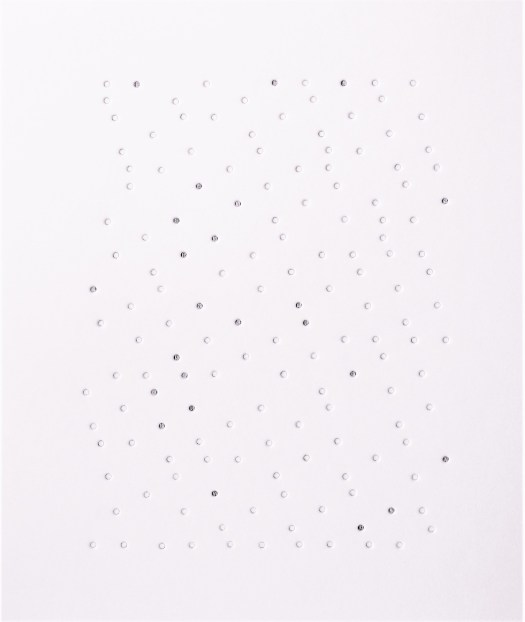
0=I
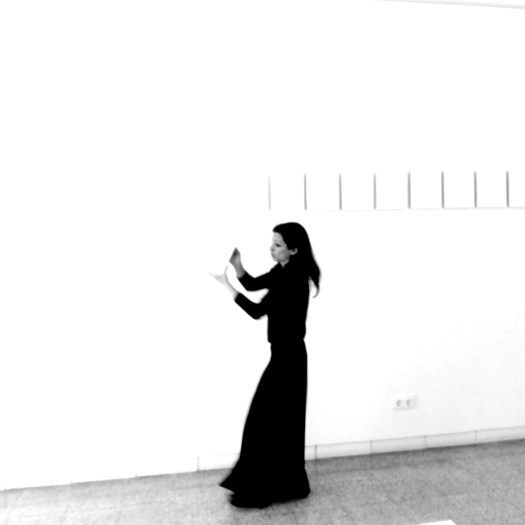
60 images of punctums—of intensified “nows”—unfolded from sequences generated by a hypnotic clock conceived by the artist and structured through a binary code of zeros and ones. Each second releases a fragment of a one-minute image, which reappears symmetrically and inverted within a 30-second cycle, producing a sustained hypnotic field.
Within this temporal architecture, the punctum is not a detail but an event: a moment of heightened presence that interrupts continuity and concentrates perception. Each “now” emerges as an incision within the flow, a threshold where time ceases to progress linearly and instead intensifies.
The movement contracts and expands like an open lung or a beating heart, establishing a monitored rhythm in which the same image returns every 30 seconds, as if contained within a memoryless system. This repetition generates a recursive present—continuous, yet destabilized—leading the viewer toward a perceptual displacement, where time is no longer measured but experienced as duration and intensity.
As the installation unfolds, the black—initially structuring the visual field—gradually recedes. By the end of the minute, the subject loses stable reference to self, becoming absorbed into a centrifugal, circulating movement. What remains is a state of temporal immersion, where perception operates within an expanded, abducted present.
0=I
60 imágenes de punctums—de “ahoras” intensificados—desglosadas a partir de secuencias generadas por un reloj hipnótico concebido por la artista y estructurado mediante un código binario de ceros y unos. Cada segundo libera un fragmento de una imagen de un minuto, que se repite de forma simétrica e invertida en ciclos de 30 segundos, configurando un campo hipnótico sostenido.
En esta arquitectura temporal, el punctum no es un detalle, sino un acontecimiento: un instante de presencia intensificada que interrumpe la continuidad y concentra la percepción. Cada “ahora” emerge como una incisión en el flujo, un umbral donde el tiempo deja de avanzar linealmente para volverse experiencia.
El movimiento se contrae y se expande como un pulmón abierto o un corazón palpitante, estableciendo un ritmo monitorizado en el que la misma imagen retorna cada 30 segundos, como si habitara un sistema sin memoria. Esta repetición genera un presente recursivo—continuo pero desestabilizado—que conduce al espectador hacia un desplazamiento perceptivo donde el tiempo deja de medirse y pasa a experimentarse como duración e intensidad.
A medida que la instalación avanza, el negro—que inicialmente estructuraba el campo visual—se disuelve progresivamente. Al finalizar el minuto, el sujeto pierde la referencia estable de sí mismo y queda absorbido por un movimiento de circulación y centrifugación. Lo que permanece es un estado de inmersión temporal, donde la percepción opera dentro de un presente expandido, abducido.
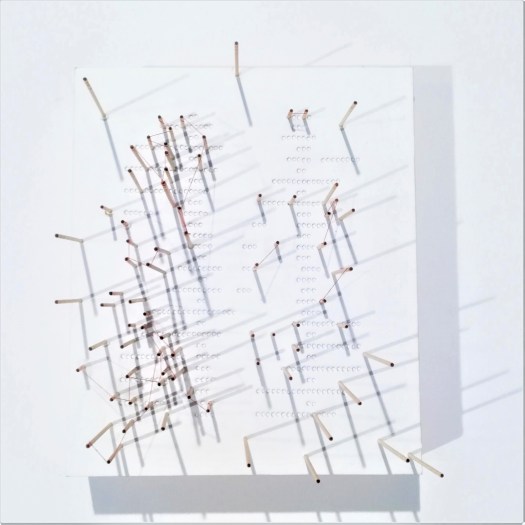
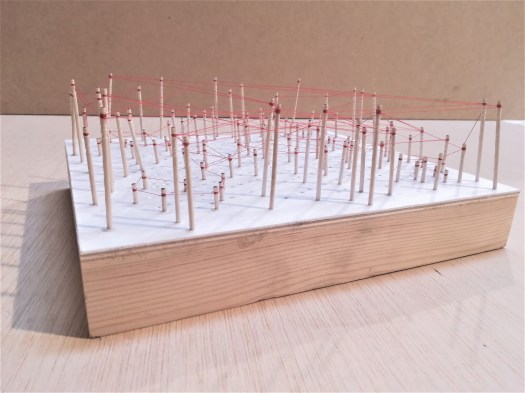
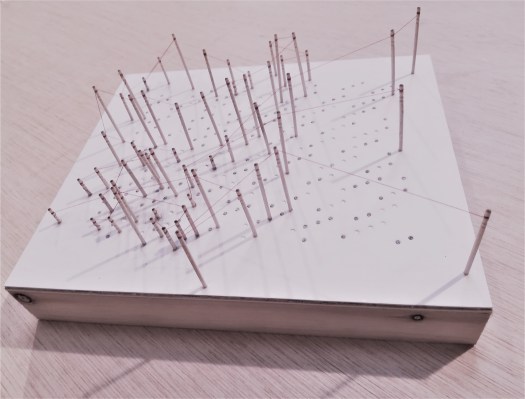
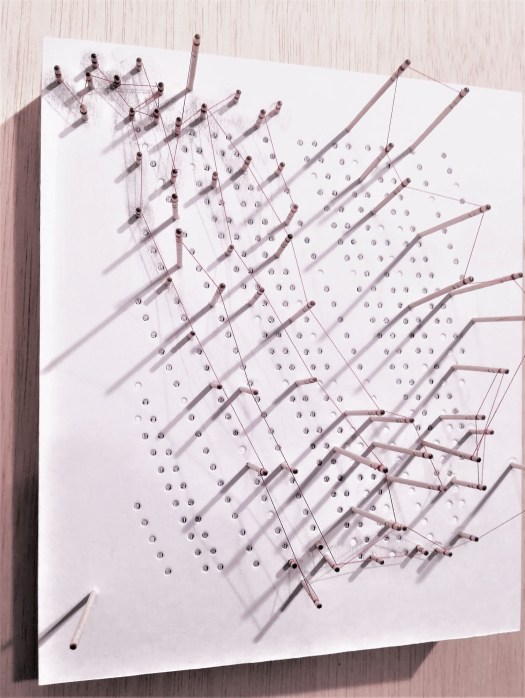
SIMULTANEOUS ETERNALS: TACTILE PERCEPTION, BLIND EXPERIENCE AND EXPANDED TIME
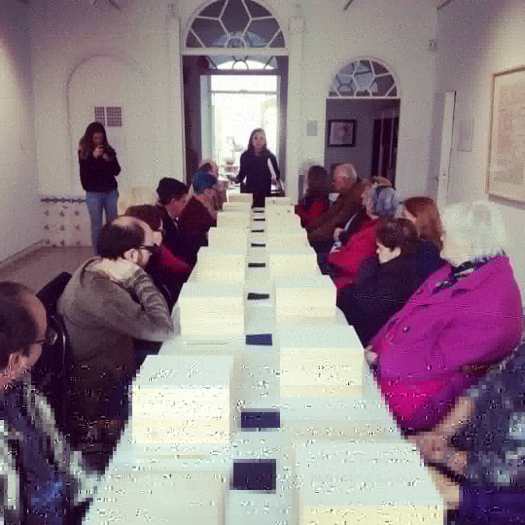
This project began in 2018 with the intention of reconfiguring modes of access to art, foregrounding proximity and inclusion—particularly in relation to people with visual impairments, who have historically been underrepresented within the field of the visual arts.
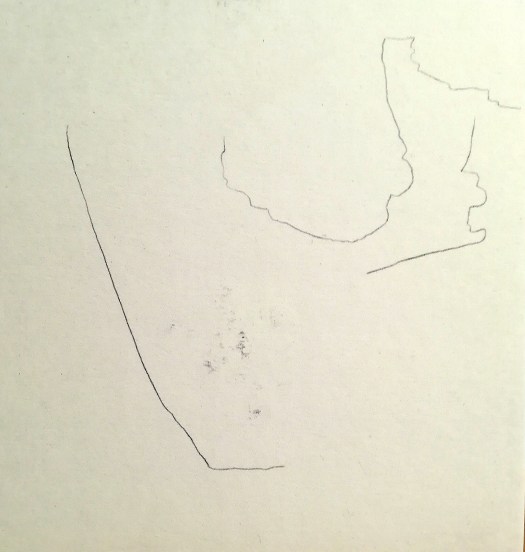
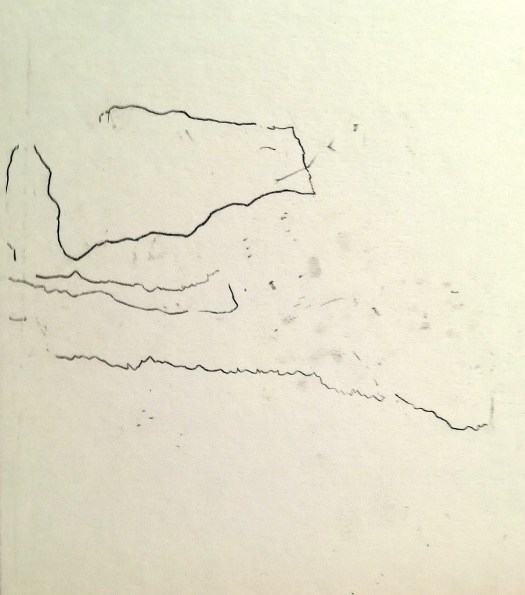
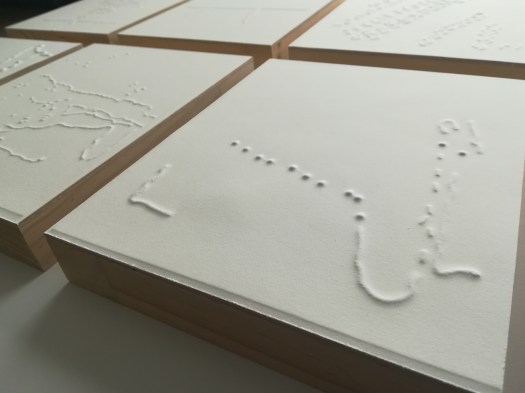
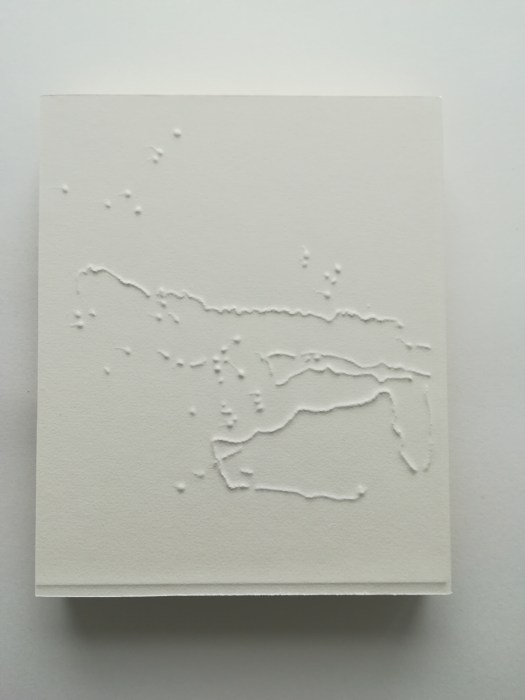
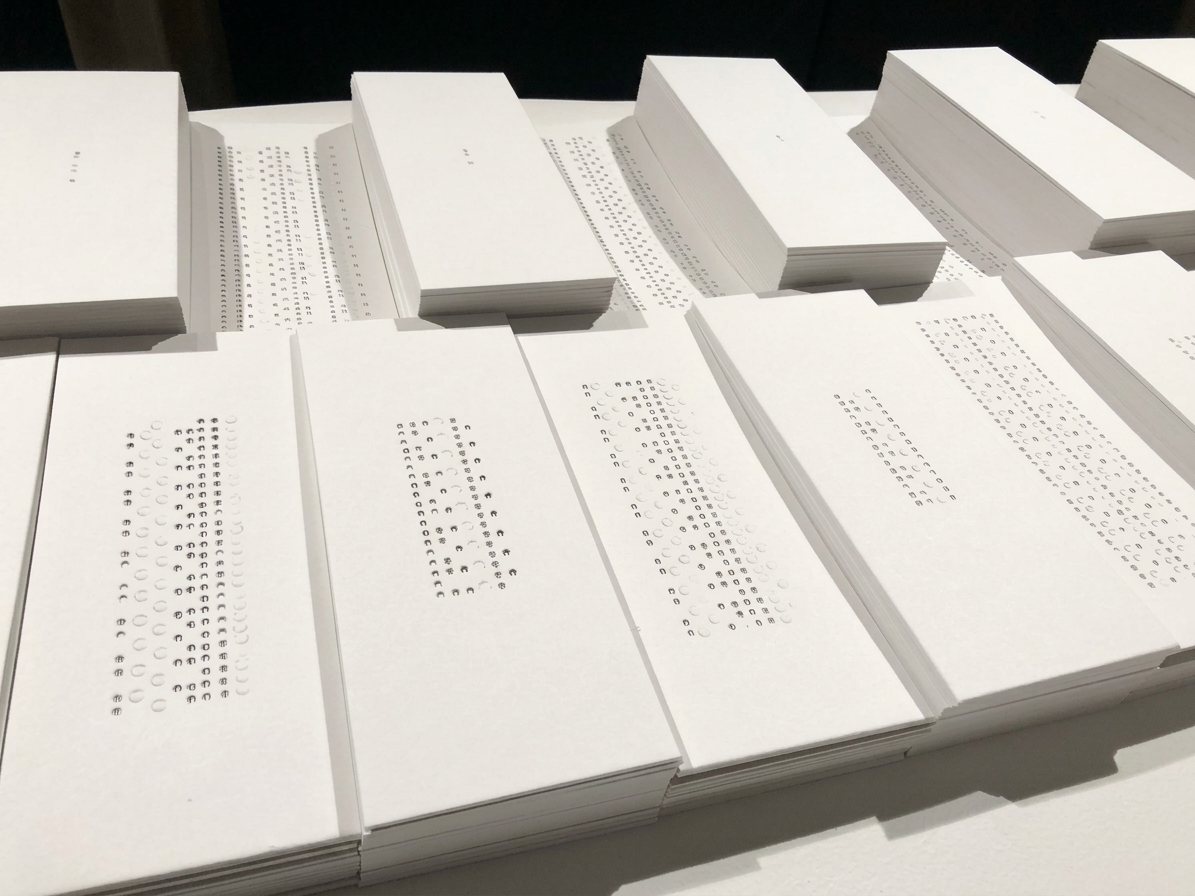
Based on an installation composed of 60 units, the works were entrusted to 16 visually impaired participants, who activated them through touch. This gesture displaces the axis of perception: vision no longer structures the experience; instead, it is contact, the haptic journey, the reading through the skin. Through this process, each participant manipulated the pieces, reinterpreting and recoding the image by translating spatial information into tactile form.
Rather than relying on normative systems such as Braille, the project enabled a direct, non-mediated engagement. The image is neither fixed nor retained as a stable representation; it is continuously transformed. Each interaction generates a singular reading: drawings that emerge from touch, from a relocated form of seeing situated in the hand.
These interpretations were later collected and transformed into embossed works (blind embossing), returning to the participants a material translation of their own perception. A feedback loop is thus established: from image to touch, from touch to graphic trace, and back again to perception.
The process gave rise to a study focused on trajectories of intensity and tactile topographic structures, where the 60 pieces operate as perceptual architectures. Rather than closed results, these forms remain as an open field of research—available to be reactivated and further developed in future stages of the work.
Este proyecto se inicia en 2018 con la voluntad de generar un desplazamiento en las formas de acceso al arte, poniendo el foco en la proximidad y la inclusión, especialmente en relación con personas con discapacidad visual, tradicionalmente poco consideradas dentro del ámbito de las artes plásticas.
A partir de una instalación compuesta por 60 unidades, las piezas fueron cedidas a 16 participantes invidentes, quienes las activaron a través del tacto. Este gesto desplaza el eje de la percepción: ya no es la mirada la que organiza la experiencia, sino el contacto, el recorrido háptico, la lectura a través de la piel. En este proceso, cada participante manipuló las piezas, reinterpretando y recodificando la imagen mediante una traducción táctil del espacio.
Lejos de operar bajo sistemas normativos como el código braille, la experiencia permitió una aproximación directa, no mediada, donde la imagen no se fija ni se retiene como representación estable, sino que se transforma continuamente. Cada interacción generó una lectura singular: dibujos que emergían desde el tacto, desde “unos ojos” desplazados hacia la mano.
Estas interpretaciones fueron posteriormente recogidas y transformadas en gofrados, devolviendo a los participantes una traducción material de su propia percepción. Se establece así un circuito de ida y vuelta: de la imagen al tacto, del tacto a la gráfica, y de nuevo a la percepción.
El conjunto del proceso dio lugar a un estudio centrado en recorridos de intensidad y en estructuras topográficas táctiles, donde las 60 piezas se configuran como una suerte de arquitecturas perceptivas. Más que resultados cerrados, estas formas permanecen como campo abierto de investigación, susceptibles de ser reactivadas y revisitadas en futuras fases del trabajo.
UNTITLED: Mixed media on wood 50 x 50 cm, 2018. Detail
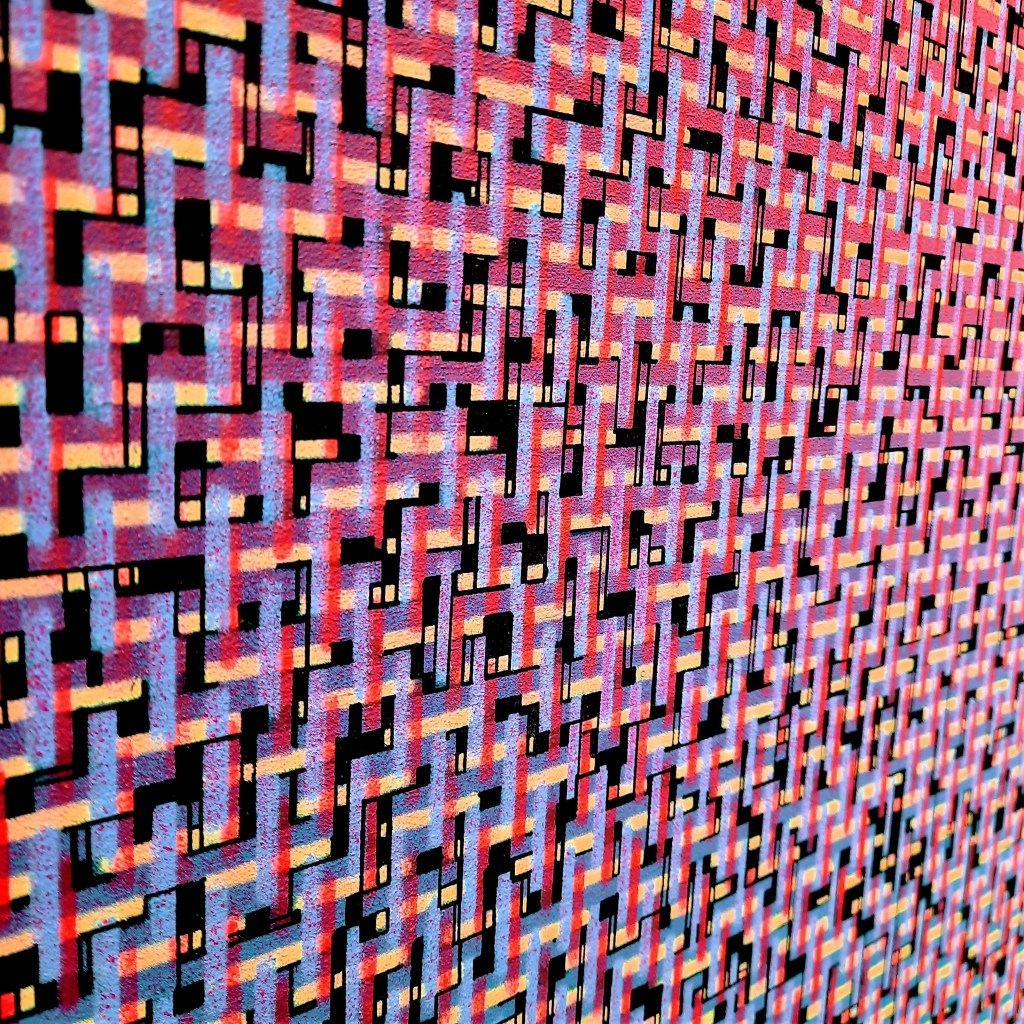
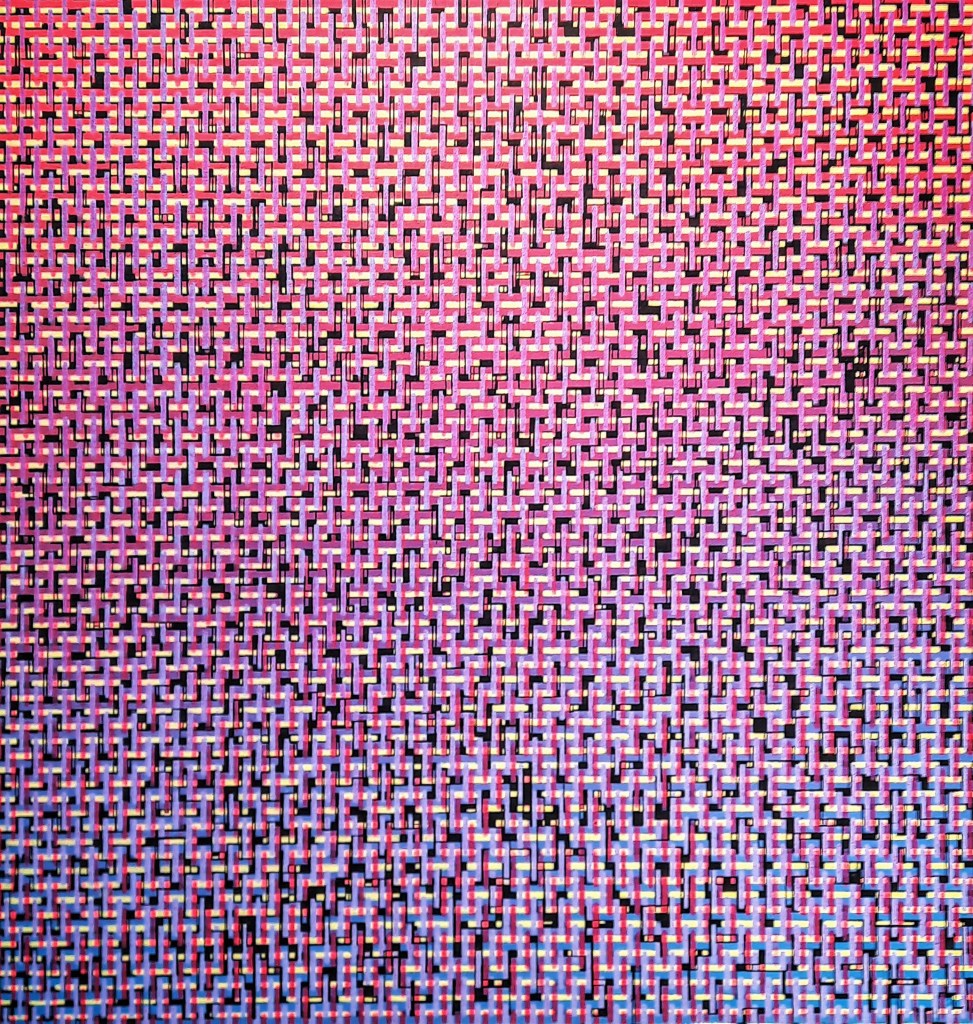
FOUR PERCENT EIGHTY DEGREES OF CARTOGRAPHIES OF THE VOIDS WITH ELECTROMAGNETIC RADIATIONS: Acrylic and lamp black pigment dispersed and bound with shellac on wood. 100 × 100 cm, 2020. Detail
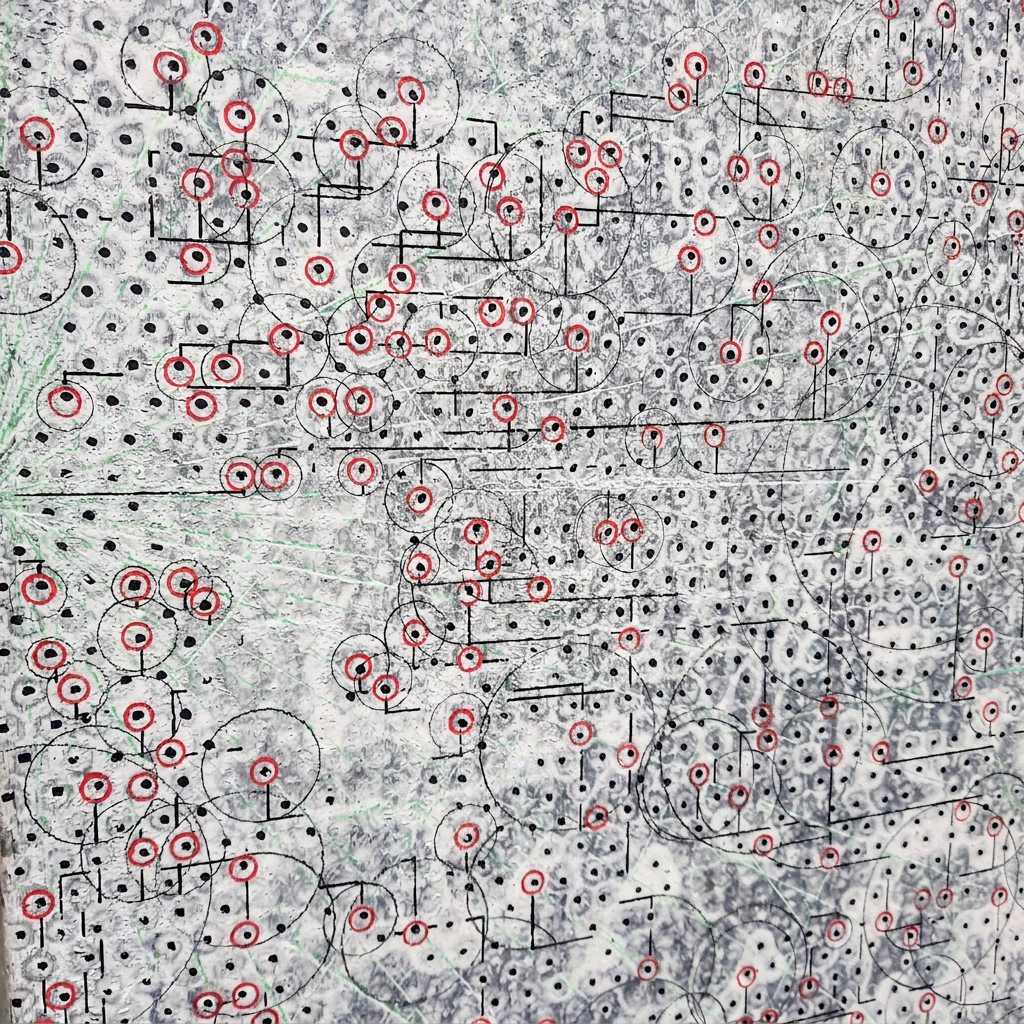
META X: Acrylic, oil, graphite and pigment with resin on canvas 200 × 200 cm, 2021.
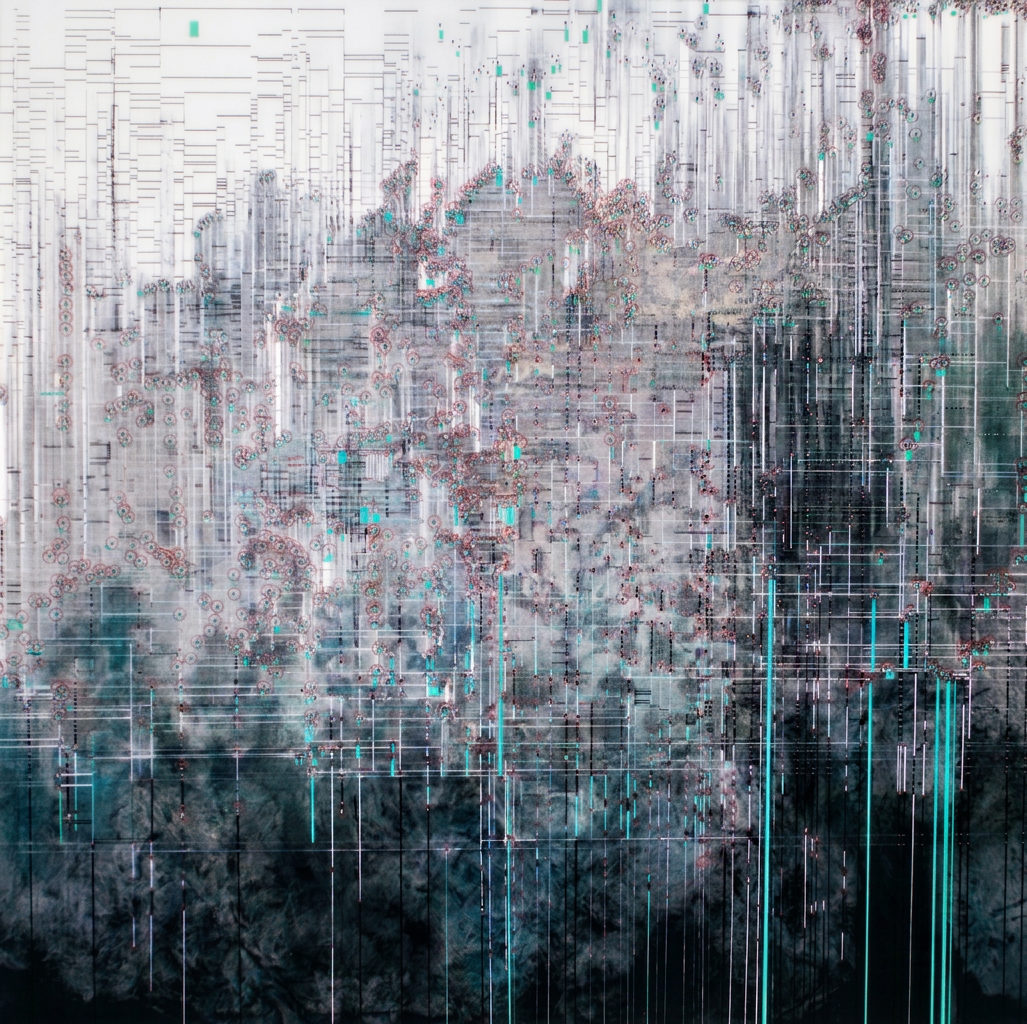
GRAPHIC TRANSMISSION CODES: Acrylic and pigment bound on wood. 100 × 200 cm. 2020.
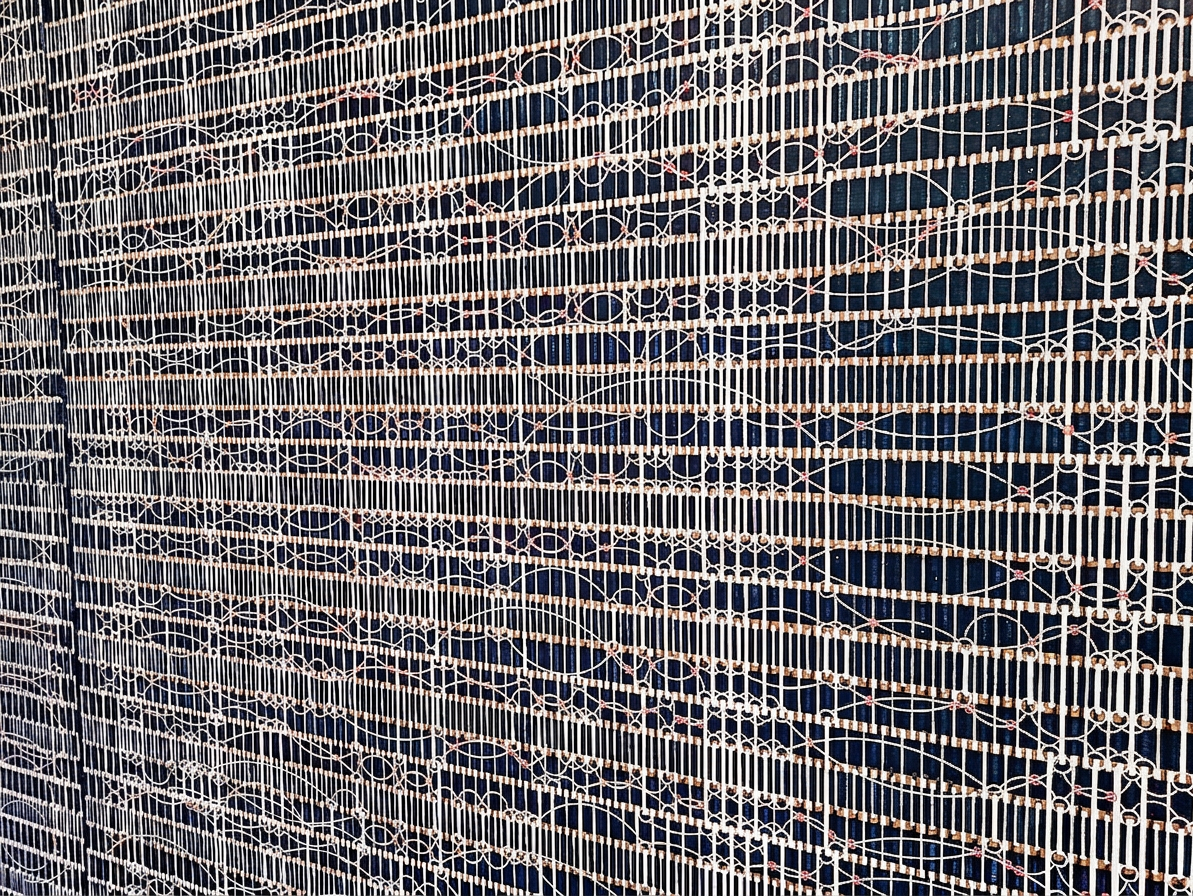
STONES AND COLLECTIVE MADNESS. REFLECTION ON TECHNOLOGY AND THE PAINTING BY HIERONYMUS BOSCH: Acrylic and oil on canvas 160 × 120 cm, 2022
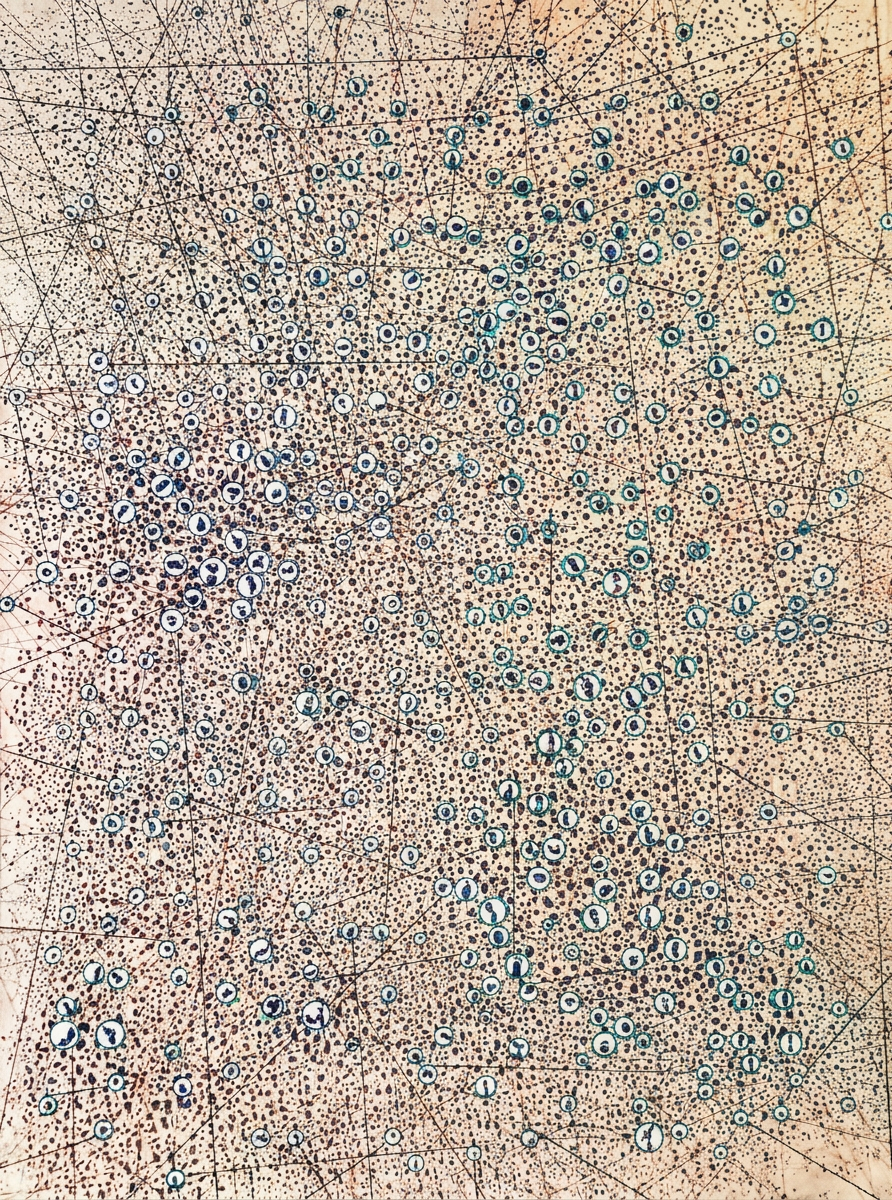
TRANSMISSION AND CONNECTIVITY: Mixed media on wood 80 x 80cm , 2023
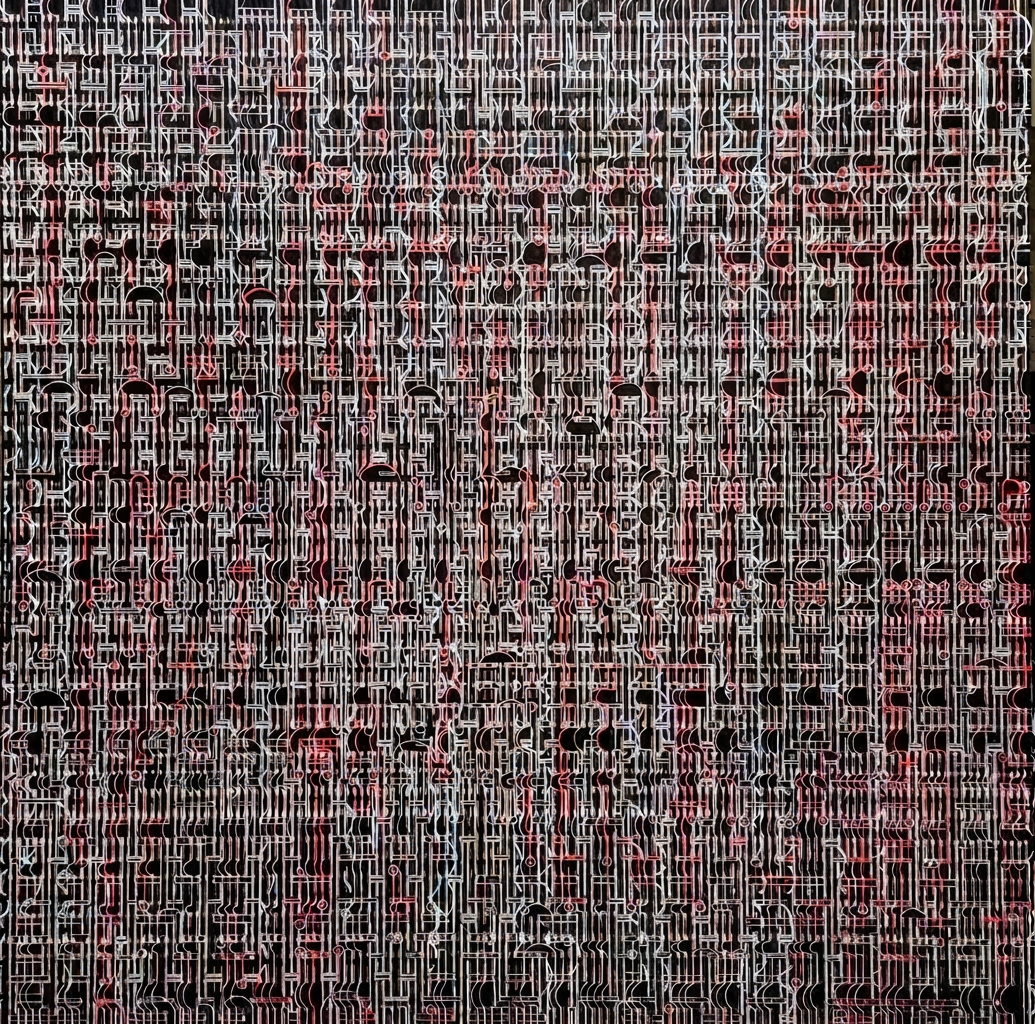
The structures developed from 2023 to the present are situated within a context shaped by informational collapse: a dense network of experiences, social relations, image production and consumption, where manipulation and saturation define the contemporary perceptual landscape. The pictorial practice operates within this hyperconnected system of networks, not as literal representation, but as a critical field from which to engage with the collective image, digital culture, and its modes of construction.
In this sense, the work does not describe the digital era; it constitutes it as a present condition—a space where techniques, languages, and innovations converge, tensioning the boundaries between the analog and the technological. From here, painting unfolds toward parameters such as frequency, angle, velocity, and length, understood not only as physical magnitudes but as perceptual structures.
Formally, the work becomes increasingly generative and meticulous, originating from a minimal unit—a point, a zero, a perforation—from which the surface is activated. This act of “piercing” is not merely material, but temporal: an insistence on a continuous present that resonates with the logic of code and repetition.
The tool becomes a key element—not only as a medium, but as a device that enables a passage of connectivity and perceptual transformation. The works configure complex grids of relations that reflect displacement—visual, mental, spatial—and, through their reiteration, approach metaphysical principles related to being and existing in relation to the environment.
This geometric exploration does not function as a closed conceptual framework, but as an open structure that allows painting to articulate the connections between perception, experience, and understanding.
Las pinturas desarrolladas desde 2023 hasta la actualidad se sitúan en un contexto marcado por el colapso informativo: un entramado denso de experiencias, relaciones sociales, producción y consumo de imágenes, donde la manipulación y la saturación configuran el paisaje perceptivo contemporáneo. La práctica pictórica se inscribe en este sistema hiperconectado de redes, no como representación literal, sino como un campo crítico desde el cual abordar la imagen colectiva, la cultura digital y sus modos de construcción.
En este sentido, la obra no describe la era digital, sino que la constituye como una condición presente: un espacio en el que convergen técnicas, lenguajes e innovaciones que tensionan los límites entre lo analógico y lo tecnológico. A partir de ahí, la pintura se despliega hacia parámetros como la frecuencia, el ángulo, la velocidad o la longitud, entendidos no solo como magnitudes físicas, sino como estructuras de percepción.
Formalmente, el trabajo se vuelve cada vez más generativo y minucioso, partiendo de una unidad mínima —un punto, un cero, una perforación— desde la cual se activa la superficie. Este gesto de “perforar” no es únicamente material, sino también temporal: una insistencia en un presente continuo que dialoga con la lógica del código y la repetición.
La herramienta se convierte así en un elemento clave, no solo como medio, sino como un dispositivo que permite explorar un tránsito de conectividad y transformación perceptiva. Las obras configuran retículas complejas de relaciones que reflejan desplazamientos —visuales, mentales, espaciales— y que, en su reiteración, rozan principios de orden metafísico vinculados al ser y al estar en relación con el entorno.
Esta exploración geométrica no actúa como un marco conceptual cerrado, sino como una estructura abierta que permite comprender, desde la pintura, las conexiones entre percepción, experiencia y conocimiento.
UN–SHOD – STEPS – INTO IT (REFERRING TO HOW WE ALL STUMBLE WITH TECHNOLOGY) Mixed media on canvas 130 x 195 cm, 2023
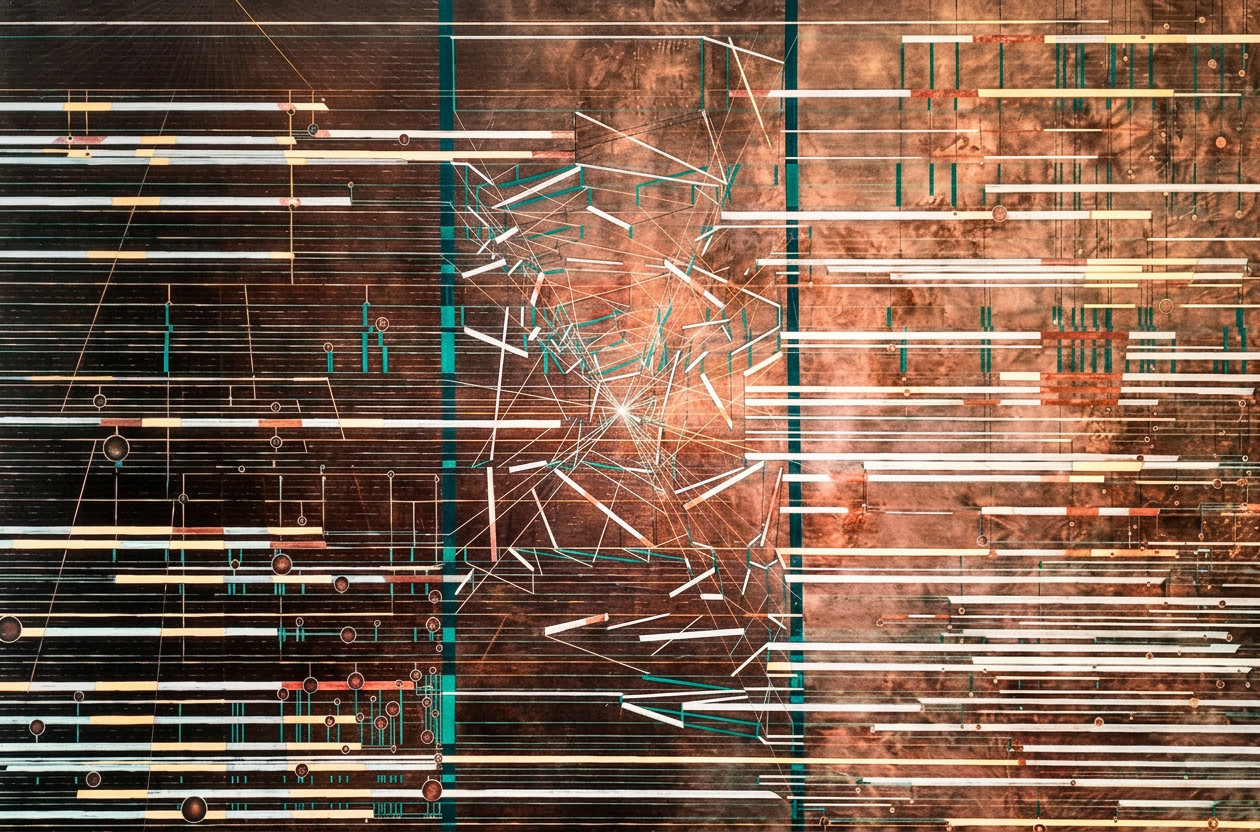
GLASS ARCHITECTURES:oil, acrylic, graphite, black chalk stick, smoke on canvas. 195 × 160 cm, 2023
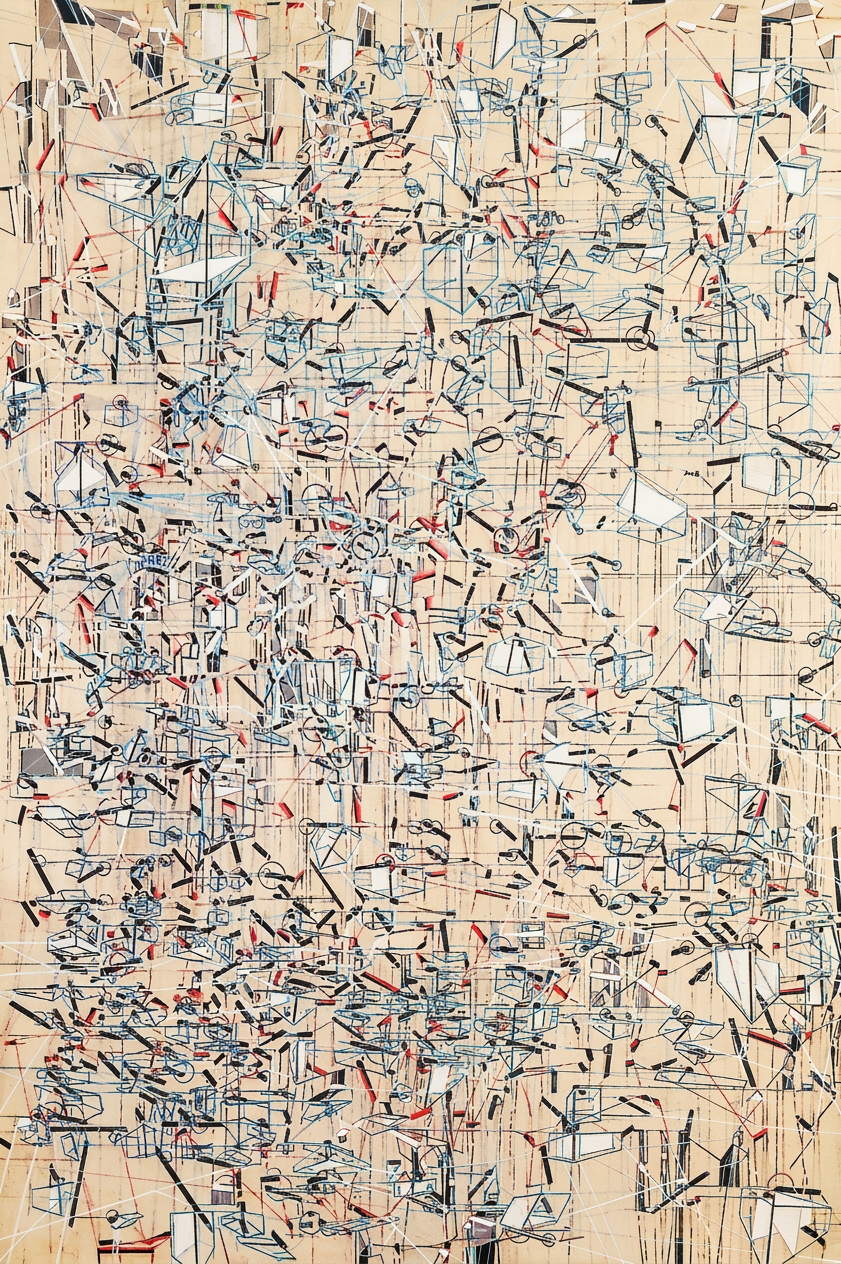
ARCHITECTURES OF LIGHT DRAWN BY THE WIND OVER A SMALL FRACTION OF THE EVER-UNKNOWN MEDITERRANEAN: Acrylic, nubaline and oil on canvas. 175 × 195 cm, 2024
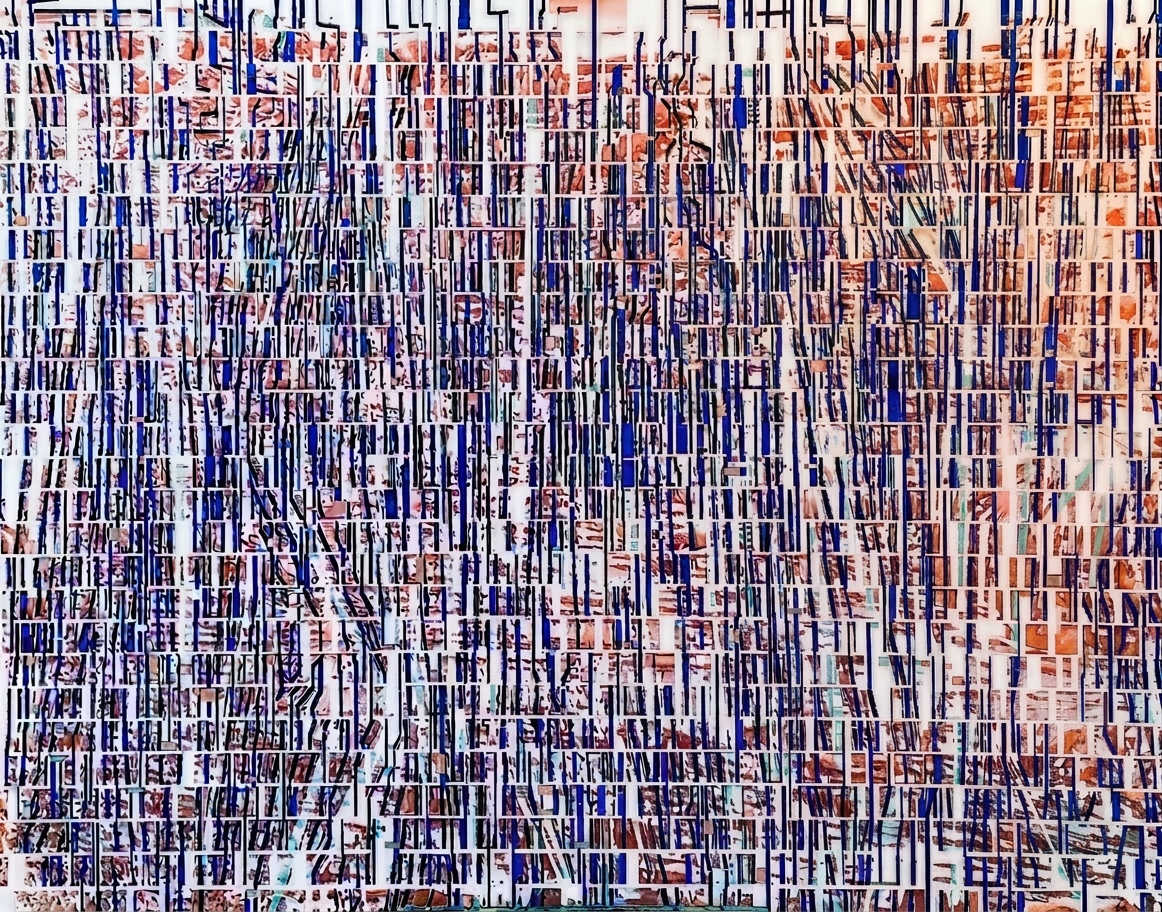
PHYSARUM POLYCEPHALUM: Mixed media on canvas 130 x 170 cm, 2021
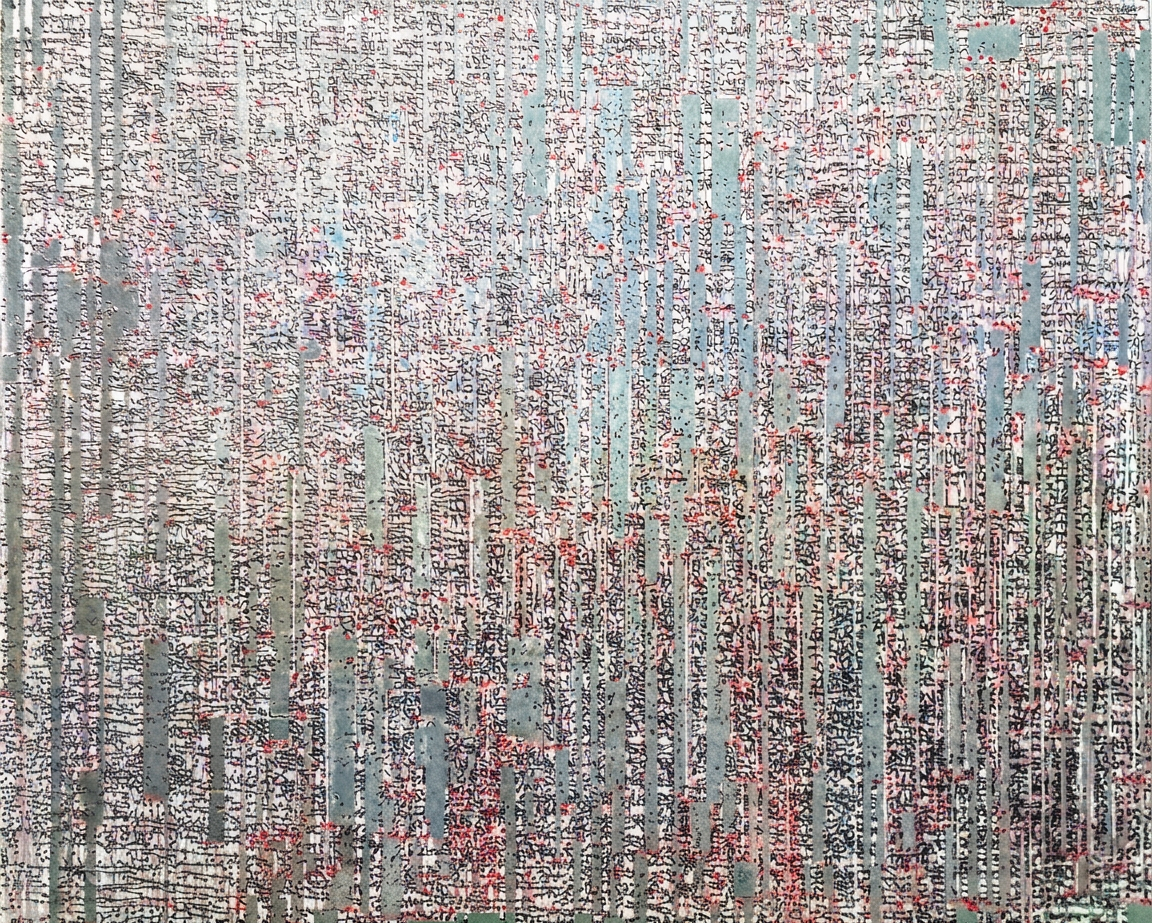
IN THE SHADOWS OF MEMORY. THE SEARCH OF AN AMNESIAC: pastel, colored pencil on passepartout. 70 × 100 cm. 2020 Detail
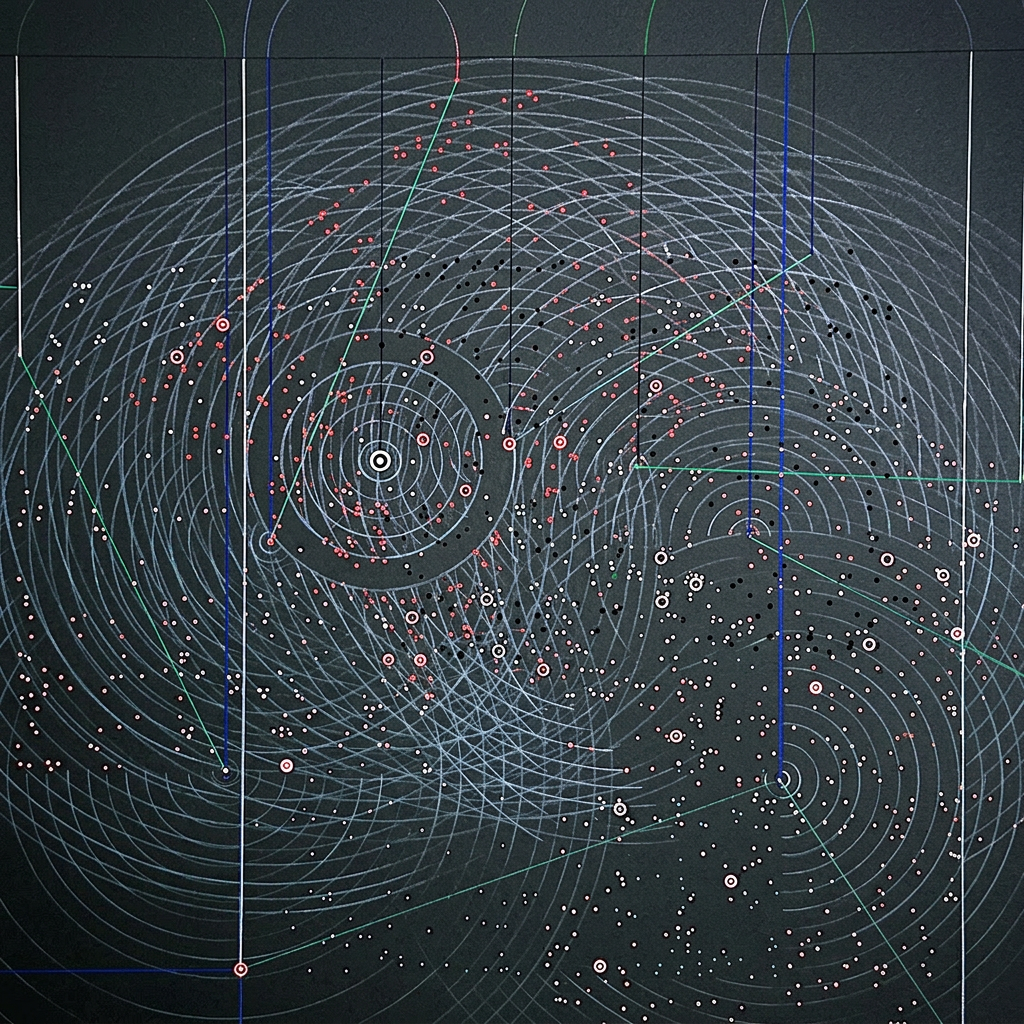
IN BETWEEN: minting, ink, graphite, pastel on passepartout. 90 × 120 cm. 2019
OF IDENTITY SEDIMENTATION: minting and printing on 3 mm thick passepartout. 27 units, 27 × 13 cm. 2020
 MARTA JUVANTENY COLELL